Notice: Function WP_Scripts::add was called incorrectly. The script with the handle "datatables-responsive" was enqueued with dependencies that are not registered: datatables. Please see Debugging in WordPress for more information. (This message was added in version 6.9.1.) in /home/u621095157/domains/brigantesnation.com/public_html/wp-includes/functions.php on line 6131
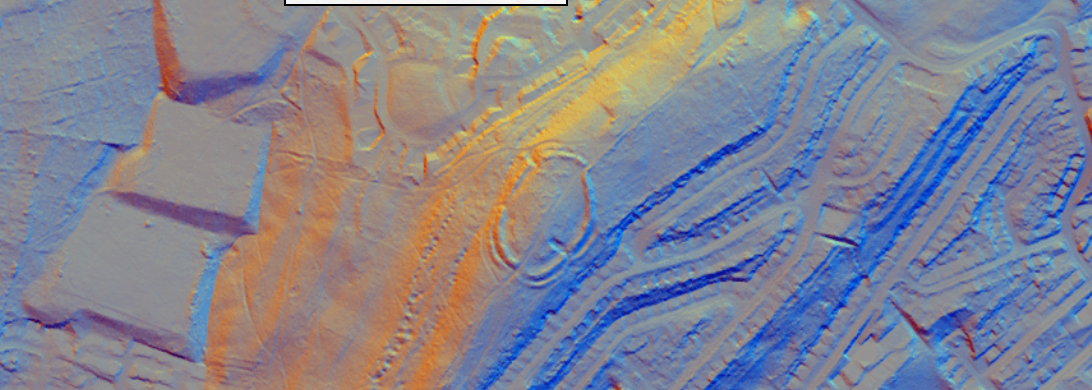
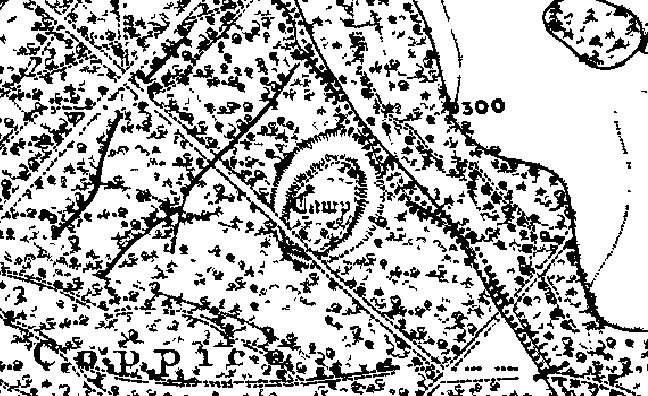
Scholes (or Scoles) Coppice Camp (sometimes called “Caesar’s Camp”) lies just north-west of Kimberworth in Rotherham, atop the same Magnesian Read more
Julius Caesar made the first significant Roman attempt to conquer Britannia in 55 BCE during his campaign in Gaul. He Read more
Adwick‐le‐Street’s Roman Fort (Derventio)
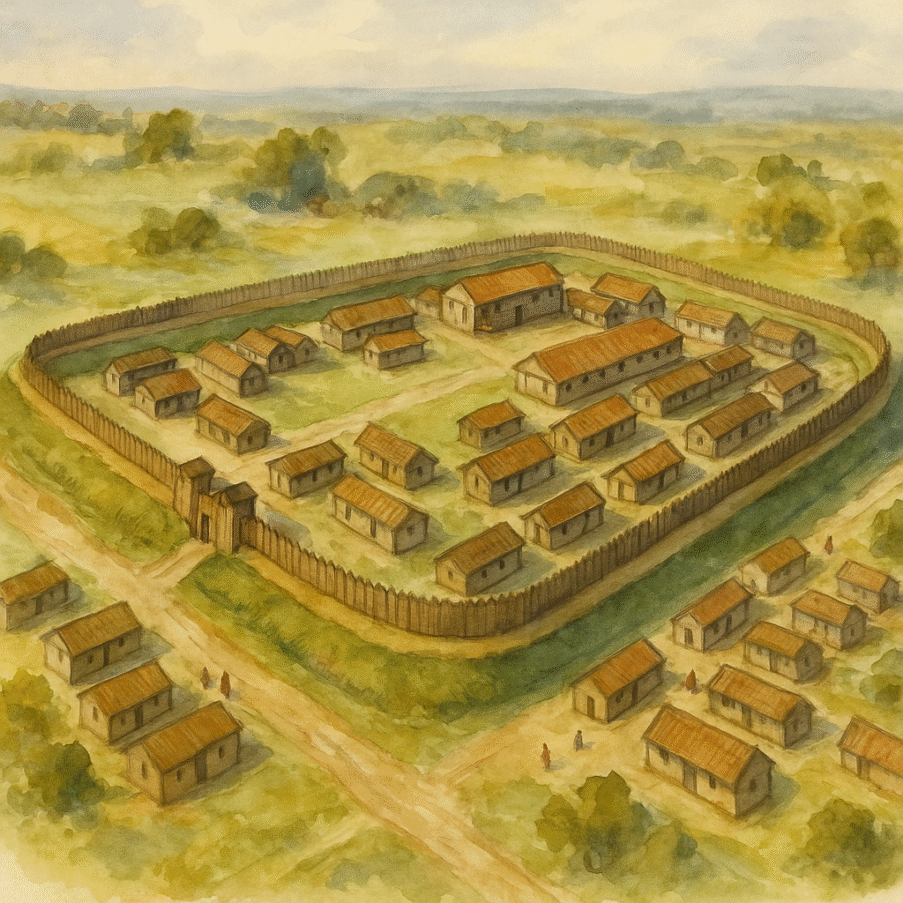
Derventio was an auxiliary fort, it probably housed a mounted ala or an infantry cohort. It is located immediately west of modern Adwick le Street (OS SE 553 008), astride Ermine Street (the Roman Ridge).
Permanent construction: Like the other frontier forts along the Don Valley, it was planned and laid out from the outset as a stone‐faced, clay‐backed rampart enclosure with internal timber barracks, principia and granaries.
What we know of Derventio (Adwick‐le‐Street)
Size & Plan: Approximately 125 × 170 m internally (ca. 2 ha), with stone ramparts 2–3 m thick and external ditches .
Garrison: Tile stamps and inscriptions point to units such as Numerus Barcariorum Tigrisiensium (boatmen) and a cavalry vexillation—all auxiliary troops tasked with patrolling the Don valley waterways .
Vicus & Industry: Excavations at Redhouse Farm revealed a civilian settlement of timber workshops, smithies and taverns lining the road.
Adwick‐le‐Street (Derventio) was a purpose‐built auxiliary fort, established c. AD 70–80.
The Roman Ridge (Ermine Street) running right through the centre of Adwick le Street.
Redhouse Farm excavations (2000–17 by MOLA) immediately west of Adwick revealed traces of Bronze-Age and Iron-Age activity, and Roman roadside occupation—postholes, pottery scatters, workshop debris—associated with the major north-south trunk road, but no barrack blocks or rampart circuits indicative of a fort (archaeopress.com).
Adwick sits on the Roman Ridge, and lies between the river-crossing forts of Templeborough to the west and Danum to the south-east.
The roadside settlement at Adwick likely served as a staging post or minor vicus for traffic and trade, not as a permanent military base.
What You See Today
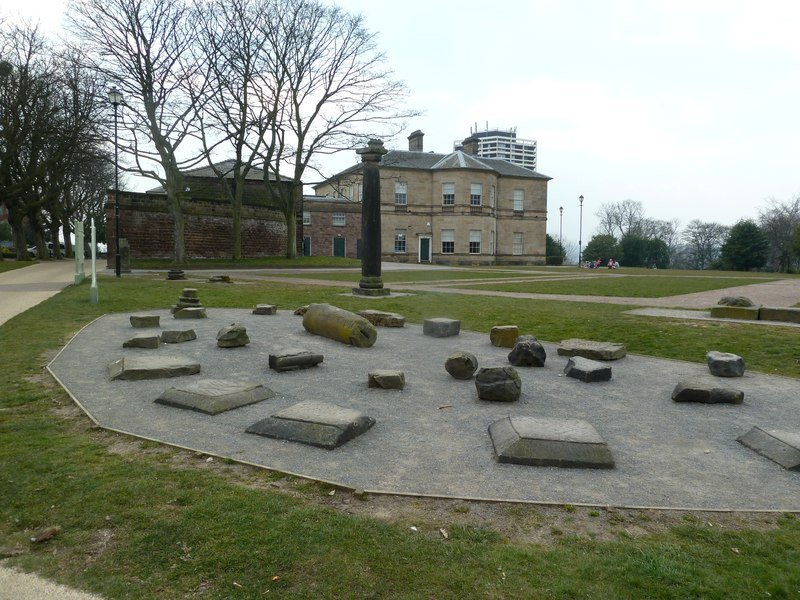
Roman Ridge (Ermine Street): The line of the old road is still visible as the modern A638 through Adwick le Street, with scheduled-monument status (SM1179a/b) (heritagegatway.org.uk).
Redhouse Farm area: While no fort survives, MOLA’s 17-year programme recorded settlement pits, structural post-holes and a few Roman sherds—evidence for a modest civilian occupation tethered to the road, but without the defensive Earthworks of a fort (archaeopress.com).