Period: Post Roman

Templeborough Roman Fort – Rotherham

Templeborough Roman Granary remains at Clifton Park Museum

Templeborough Roman Fort occupies a commanding position on the north bank of the River Don at Rotherham (OS grid SK 410 916), where the Magnesian Limestone ridge drops into the floodplain. Originally constructed in timber and earth in the mid–1st century AD, it was later rebuilt in stone and occupied—possibly intermittently—until the withdrawal of Roman authority in the early 5th century AD
Guide: Spoil Heaps

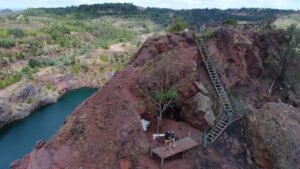
Ochre mine in the Lion Cavern in Eswatini southern Africa - Credit - Jörg Linstädter

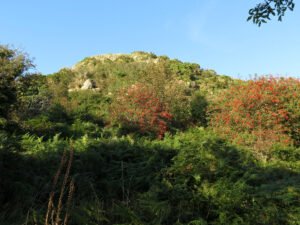
These are artificial hills made from the unwanted rock, shale and tailings that come up with coal, metal ore, stone or clay when it is being mined or quarried. Because extractive industry is both deep and long-lived, single collieries or pits can generate tens of millions of cubic metres of spoil; pushed out by locomotive, conveyor or tippler wagon and dumped in successive layers, the piles quickly become a distinctive landform.

Mote of Mark Hill Fort

Mote of Mark from sea shore path

The Mote of Mark is a defended hilltop overlooking the Urr estuary. It was the court or citadel of a powerful Dark Age chieftain, possibly one of the princes of Rheged. The site was occupied during the 6th century and appears to have been destroyed by fire in the 7th century.

West Scrafton – Coverdale

West Scrafton

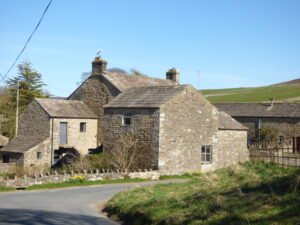
West Scrafton is a village located in Coverdale in the Yorkshire Dales. It sits on the southern upward slops of Coverdale, and had its most recent heyday in the 19th century when coal mining took over the village.

Flats Hill – Carlton in Coverdale

Flats Hill Mound - Carlton-in-Coverdale - view from road

Flats Hill mound is approximately 30 meters in diameter and stands about 3.6 meters high. It has never been excavated, although a dry stone wall seems to have been started, and then stopped, partly over its top. It has been suggested as, and is listed as a probable barrow, with a presumably wide date, likely to be in the Bronze Age or Iron Age date range.

Guide: The Ard – Early Ploughing in English Brigantia

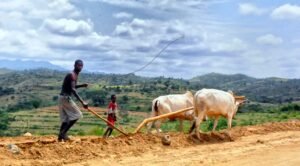
Single Tyne Plough, Arba Minch

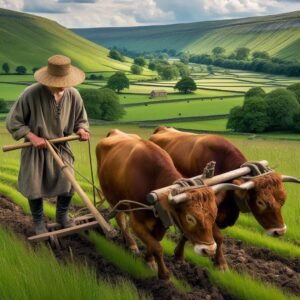
The ard, also known as a scratch plough, represents one of the earliest forms of agricultural technology used by the people of ancient Brigantia.

Guide – The Roman Period in the British Isles

Emperor Augustus dressed as a deity, parading through ancient Rome

Julius Caesar made the first significant Roman attempt to conquer Britannia in 55 BCE during his campaign in Gaul. He landed on the shores of south-eastern Britain, but his invasions were brief and mostly for reconnaissance. Despite some skirmishes, there was no lasting conquest at this stage.

Early Christian syncretism and how the old ones hid amongst the new religion

Syncretism is where two or more differing beliefs become merged. In England, this first happened under Roman rule, where many pre-existing Celtic shrines to specific deities were associated with Roman deities of the same qualities or attributes. Based on extensive research, I am now confident that in Britain, the early Christians undertook a similar process and with that knowledge, we should be able to reverse engineer, to some extent, our local Brigantian Celtic pantheons.

The growth of Christianity 50AD – 1100AD

We look at the development of Christianity from 50AD to 1100AD in both the broader European context and also for the people of Brigantia.

Guide – Agricultural practices through time

Prehistoric Yorkshire is a landscape rich with history, revealed through various archaeological finds that offer a glimpse into the ancient past. The oldest evidence of human activity in this region dates back to around 125,000 years ago, but it is the later periods, particularly the Iron Age, that have yielded significant discoveries related to ploughing and farming.

Contact Us
close slider