

We look at the development of Christianity from 50AD to 1100AD in both the broader European context and also for the people of Brigantia.
Jul 03
We look at the development of Christianity from 50AD to 1100AD in both the broader European context and also for the people of Brigantia.
Jun 19

Prehistoric Yorkshire is a landscape rich with history, revealed through various archaeological finds that offer a glimpse into the ancient past. The oldest evidence of human activity in this region dates back to around 125,000 years ago, but it is the later periods, particularly the Iron Age, that have yielded significant discoveries related to ploughing and farming.
Jun 17

This report introduces walled gardens and the concept that they are an attempt to create a paradise on earth, in accordance with a long history of religious and spiritual thought that played a significant role in shaping our relationship with nature, and the design of high status estates.

The massive earthworks at Barwick and the continuation of the same profile alongside the River Cock to Aberford and beyond point to it being a place of importance as a large hillfort of some 15 acres. There were several hillforts in northern Britain when it was inhabited by a Celtic tribe called the Brigantes.
Jun 13
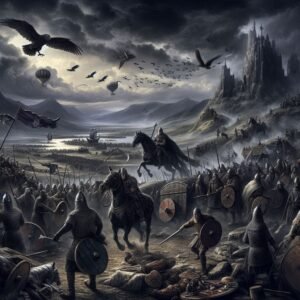
Yorkshire’s history during the Dark Ages is a tapestry of cultural shifts and invasions, beginning with the departure of the Romans in the early 5th century. This period saw the region become a melting pot of Celtic Britons, and later, the Angles and Vikings, each leaving a distinct imprint on the cultural landscape.
Jun 13
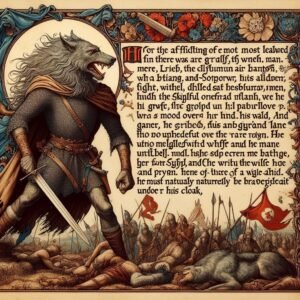
Possibly, the earliest documented battle on Brigantian soil, is described in Y Gododdin, which is a medieval Welsh poem, revered as one of the earliest surviving examples of Welsh/Brythonic poetry, and is attributed to the bard Aneirin.
Jun 11

Lady Bridge in Tamworth is a historical structure with medieval origins, serving as a testament to the town’s rich past. Initially constructed to span the River Tame, the bridge has undergone several transformations throughout the centuries. The original wooden bridge dates back to 1294.
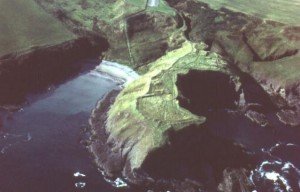
10 miles W of Fraserburgh. Access to this promontory fort is by a motorable track N from the B9031, W of the steep-sided valley of the Tore of Troup.

This is a hill fort of unproven origin, best thought to be Iron or Dark age in date. Bronze Age artifacts are also close by and show a long general occupation of the area. The primary purpose for this visit was to investigate the possibility that it was used by the Brigantes during the period of Cartimandua and, if so, to try to assess its role between 43 and 70 AD.

This earthwork was partially excavated in 1870, these revealed the foundations for a Roman villa of obvious opulence. It’s final Roman owners were believed to have suffered a grisly death as the villa burnt around them. It is likely that future excavations will reveal that the villa was built over of an earlier tribal centre. Probably replacing the shrine to the “Light Water” with a more Mediterranean alternative.
 NLS Map Explorer
 Google Earth
 Google Maps
 Lidar Finder
 TMA
TMA
 Megalithic Portal
 Yorkshire Arch. Air Mapping
 ADS
ADS
 Brigantian Adventure FB Group
Stone Bothering FB Group
Stone Faces FB Group
Brigantian Adventure FB Group
Stone Bothering FB Group
Stone Faces FB Group
 Heritage Gateway
 ARCHI® MAPS: UK
 Atlas of Hillforts
 Portable Antiquities
 British History Online
Brigantes Nation FB Group
British History Online
Brigantes Nation FB Group

