A Barrow is a mound of earth and/or stones raised over a grave or group of graves. Used from the Read more
Hillfort mounds
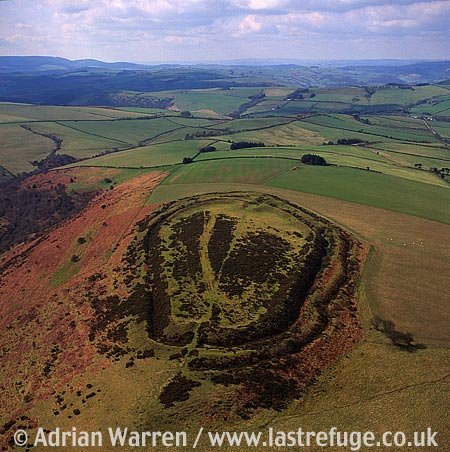
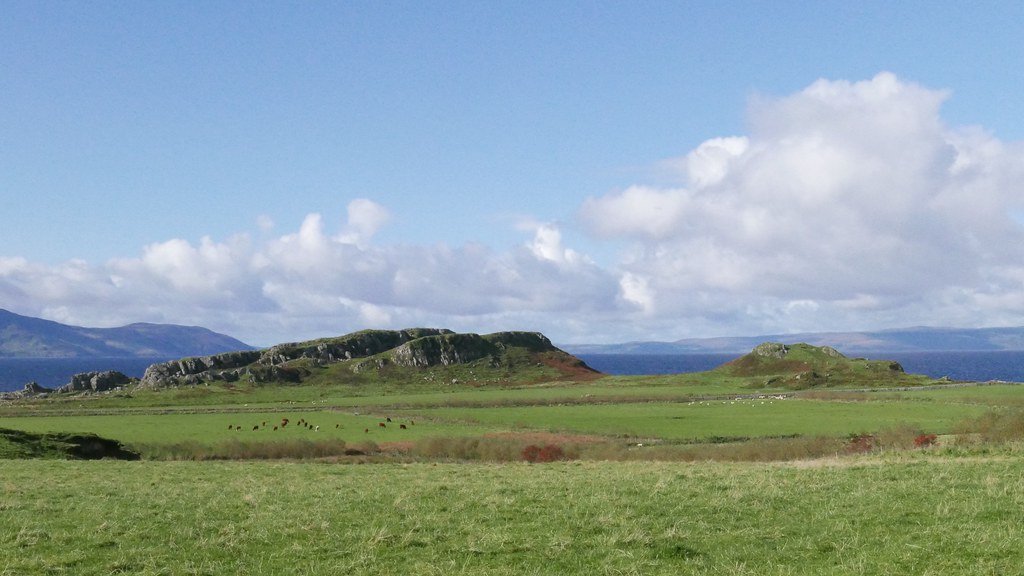
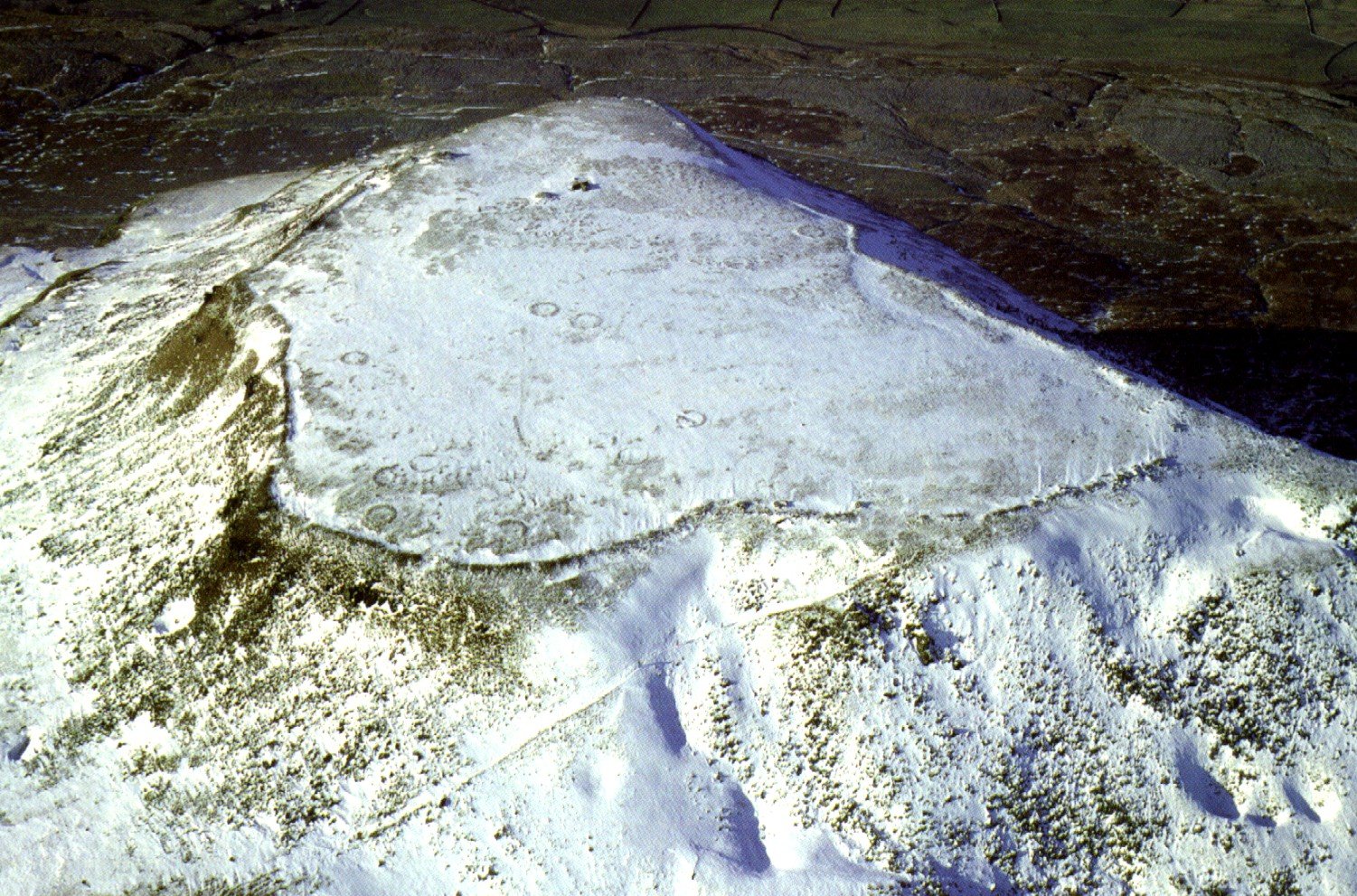
Hillfort mounds are elevated, man-made (or heavily modified) earthen platforms whose crests carry ramparts, palisades or stone walls and whose flanks are protected by one or more surrounding ditches. They appear in most parts of Europe from the Late Bronze Age (c. 11th century BCE) but flourish during the Iron Age (8th century BCE – 1st century CE). Many were re-used or newly founded in the Roman and early-medieval periods. Their positions—usually on hilltops, spurs or sea-cliffs—gave wide views for surveillance and emphasised the power of the communities that built them. Excavation shows they could serve as defended farmsteads, seasonal refuges, tribal centres, craft hubs and places of assembly or ritual. (en.wikipedia.org)
Building techniques
Typical construction begins with a ditch dug just below the brow of the slope; the spoil is thrown inward to form a bank (rampart). That bank may be:
Pure earth packed into a steep façade.
Timber-laced “box” rampart: parallel timber walls infilled with earth and rubble, known across Britain and Atlantic Europe.
Timber-framed stone rampart such as the murus gallicus of Gaul or the Bavarian-Czech Pfostenschlitzmauer (“post-slot wall”) of the Oppida, where vertical posts pierce a stone facing. (en.wikipedia.org)
Vitrified wall: a stone rampart deliberately fired until outer courses fuse, best known in Scotland but now recognised more widely. (en.wikipedia.org)
Gateways are often elaborately in-turned, sometimes with staggered passages or horn-works to slow attackers. Inside, round or rectangular houses, granaries, workshops and livestock pens cluster against the rampart, leaving a central hollow or street-grid (in the largest sites).
Timber-earth ring-wall with palisade and outer moat, 6th – 12th c CE; evolves into early castles
Poland, Czech lands, East Germany, Ukraine
Biskupin (PL), Groß Raden (DE), Mikulčice (CZ) (en.wikipedia.org)
Key concepts
Shared idea, local expression – building a mound, ditch and rampart is a simple yet powerful strategy that different cultures adapted to their terrain, materials and social needs.
Size tracks social complexity – from small univallate farmsteads to oppida of 100 ha, the scale of works mirrors political consolidation in the late Iron Age.
Re-use and memory – many medieval castles, Norman mottes or Early Christian monasteries sit inside older hillfort circuits, showing these Earthworks remained potent landmarks long after their original builders were gone.
Place in mythology – Many hillforts have a rich local mythology, often involving dragons, King Arthur, of the Devil. For example, the legend of Caer Caradoc.
Uncertain primary purpose: Hillforts were long assumed to be the defences needed by war-like tribal kingdoms. However, more recently, it has been recognised that most never saw a fight, and are more related to earlier “ritual” monuments such as barrow and cursus type monuments that this understanding of a defensive primary purpose is now much less certain as a primary purpose.
Timeline of hillfort development
Reading the timeline
Left of “0” = BCE; right = CE.
Bars show when each construction/usage phase was most widespread (regional outliers exist).
Phase
Approx. dates
Core innovations & significance
Typical regions
Proto-hillforts (Late Bronze Age)
1300 – 800 BCE
First ditch-and-bank enclosures; often single rampart; linked to Urnfield/Lusatian cultures and rising conflict.
Central Europe, Alpine zone, Po Basin, Bohemia
Early Iron-Age hillforts (Hallstatt)
800 – 450 BCE
Taller timber-laced ramparts, in-turned gates; some nucleated “seat of chiefs” sites.
Alpine forelands, Danube valley, Atlantic façade of Britain/Ireland
Early La Tène hillforts
450 – 250 BCE
New murus gallicus and pfostenschlitzmauer wall types; more planned interiors; craft & minting zones.
Gaul, Hunsrück-Eifel, SW Germany, Czech lands
Oppida (large La Tène fortified towns)
250 – 50 BCE
Urban-scale (20–150 ha), rectilinear streets, gateways with annexes; act as tribal capitals & trade hubs.
Central & W. Europe, from Spain to Bohemia
Roman-period refortifications
50 BCE – 300 CE
Some hillforts demolished; others get stone towers, signal-stations or become legionary bases.
Britain, Upper Rhine, Danube limes
Post-Roman / Sub-Roman reuse
400 – 600 CE
Shrinking populations re-occupy legacy ramparts as refuges and power bases; e.g., “dark-age” forts in Wales & Cornwall.
Atlantic Britain, Brittany, Massif Central
Slavic gords & early-medieval forts
600 – 1000 CE
Timber-earth ring-walls with outer moats; nuclei for early states (Bohemia, Polonia).
Poland, Czech & Slovak lands, N-E Germany, W Ukraine
Viking Age ring-forts
900 – 1050 CE
Geometric circular forts (Trelleborg type), heavy plank revetments, radial streets; royal military bases.
Continuity through change: While rampart engineering evolves from simple earthen banks to timber-laced and stone facings, the underlying idea of a raised, ditched circuit remains constant for nearly two millennia.
Social scale expands: Forts grow from 1 to 5 ha farmstead refuges to 100 + ha oppida as tribal confederations form, then shrink again in turbulent post-Roman centuries before re-emerging as proto-cities (gords) and state fortresses (Viking ring-forts).
Technological exchange: Construction techniques (e.g., murus gallicus, vitrified walls) spread along trade and conquest routes, showing how hillfort builders watched—and copied—one another across great distances.
A Probable Neolithic flint piece of debitage possbily intended to be a blade.The fragment is made from a tertiary flake of semi-glossy light grey flint with slightly darker grey patches. It is sub-triangular in plan [...]
A very worn and chipped Roman copper alloy radiate of uncertain emperor dating to the period AD 260-275 (Reece period 13). Unclear reverse type depicting figure standing left. Unclear mint. [...]
A heavily worn Medieval silver 'short cross' cut farthing of an uncertain monarch, Henry II to Henry III dating to the period c.1180-1247. Not further defined.Length: 9.6mm; width: 9.4mm; thickness: 0.5mm; weight: 0.4g. [...]
Silver medieval penny of an uncertain ruler, probably Henry V to Henry VI (1413 - 1461) minted at York. The coin is in poor condition, is 16mm in diameter and weighs 1.00g. [...]
A Roman copper-alloy radiate of Tetricus I/II dating to circa AD 271-274 (Reece Period 13). PAX AVG reverse type depicting Pax standing left holding branch and vertical sceptre. Gallic Mint I. [...]
A Roman copper-alloy nummus of Magnentius or Decentius dating to AD 250-253 (Reece Period 18). VICTORIAE DD NN AVG ET CAE reverse type depicting two Victories holding wreath inscribed [VOT/V/MVLT/X]. Mint of Trier. [...]
A Roman silver denarius of Antoninus Pius (AD 138-161) dating to AD 154-155 (Reece Period 7). COS [IIII] reverse type depicting Fortuna, draped, standing right, holding rudder, vertical on globe, in right hand and cornucopiae, with tip [...]
A Roman copper-alloy barbarous radiate copying a coin of Victorinus (AD 268-270) dating to circa AD 275-285 (Reece Period 14). Copying PAX AVG reverse type depicting Pax standing left holding branch and transverse sceptre. Unclear [...]
A Roman copper-alloy radiate of Carausius (AD 286-293) dating to circa AD 286-293 (Reece Period 14). PAX AVG reverse type depicting Pax standing holding branch and vertical sceptre. Unclear mint. [...]
A Roman copper alloy radiate of Tetricus II (AD 272-274) dating to circa AD 272-274 (Reece Period 1). [SPES AVG] reverse type depicting Spes walking left holding branch and raising hem of robe. Unclear mint. [...]
A free-standing pierced stone weight of uncertain age, but probably dating to the Post Medieval period.The object is sub-square in plan and rectangular in cross section. Its sides appear to have been sanded to give [...]
A Roman copper-alloy barbarous radiate copying a coin of Divus Claudius II (AD 270-271) dating to circa AD 275-285 (Reece Period 14). Copying CONSECRATIO reverse type depicting altar with crescent. Unclear prototype mint. [...]
A free-standing cast lead conical 12.43g weight of uncertain age, but probably dating to the Post Medieval period.It has a sub-circular base with concave tapering sides up to a slightly flattened apex. A circular hole runs through [...]
A free-standing cast lead conical 20.79g weight of uncertain age, but probably dating to the Post Medieval period.It has a sub-circular base with tapering sides up to a slightly flattened apex. A circular hole runs through the [...]
A clipped Post Medieval silver halfgroat of James I (AD 1603-1625). First coinage, dating to AD 1603-1604. Mint of London. North (1991: 144) No. 2076, thistle mintmark. [...]
A very worn Post Medieval silver three pence of Elizabeth I (AD 1558-1603) second coinage dating to AD 1561-1582. Mint of London. Unclear initial mark. North (1991: 135) no. 1998. [...]