Category: Archaeological Periods

Brigantia votive inscriptions – Finds and Analysis

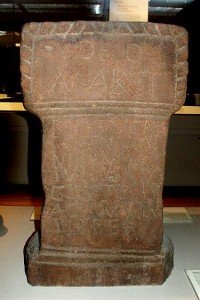
Votive inscriptions to the Goddess Brigantia have been found in the North of England using four names: Caelestis Brigantia, Nympha Brigantia, Brigantia Augusta, and Victoria Brigantia. In this report I review what is known about them, and how this knowledge can help us understand how the Romano-British viewed the Goddess.


Thoughts on Celtic Religion – Raimund, Karl

To begin with, lets first look at the sources available to us: There are quite numerous sources available, contrary to the usual belief that there is almost nothing actually there.

The Druids and Druidism

The religion of Druidism was unlike any other belief either Celtic or Roman. The Druids were considered to be enigmatic, mystical, magical – and resented. Originally they were a tribe in Gaul, and gradually developed over the years to become wanderers in Celtic society.

Celtic Gods

Many Celtic deities seem to have been associated with aspects of nature and worshipped in sacred groves. Some appear in all Celtic areas while others have purely local significance.

Monmouth’s Kings of Britain

Geoffrey of Monmouth’s Kings of Britain includes a number of unknown potential kings, as well as some recognised as existing, including King Lear from Shakespeare.

Claudius

Tiberius Claudius Nero Germanicus was born Lugunum in 10 BC, the youngest son of Nero Drusus, brother of Tiberius. He was a strange child and prone to constant illness, not only of the body, but also the mind.

Augustus

Suetonius wrote of him:

He was very handsome and most graceful at all stages of his life, although he cared nothing for any sort of refinery. He was so uninterested in how his hair was dressed that he would set several barbers to work at once in a hurry, and he would have his beard clipped at one time and shaved at another, and while the barbers were working he would read or even write something.

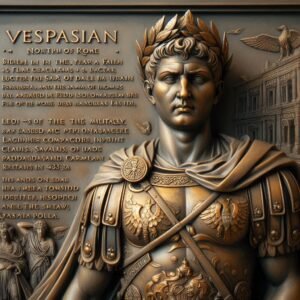
Vespasian

Born in the year 9 at Reate, north of Rome, Vespasian was the son of a tax collector, Flavius Sabinus and his wife, Vespasia Polla. He joined the military and achieved the rank of legionary commander, serving under Claudius during the invasion of Britain in 43AD.

Julius Caesar

Ask anyone to name a famous Roman character, and the name of Julius Caesar is sure to be the most popular answer. Although he failed twice to conquer Britain, he still became an icon of Rome. So how did this man manage to become a legend?

Cerialis Petillius

Cerialis Petillius

Quintus Petillius Cerialis Caesius Rufus was the son-in-law of Vespasian Cerialis and became Governor of Britain in AD.71; his instructions were plainly to move the conquest forward, and he brought with him a new legion, II Adiutrix, which had recently been recruited from members of the fleet at Ravenna.

Contact Us
close slider