
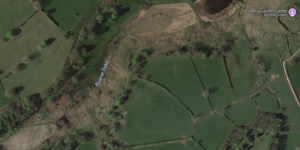
John O’Gaunt’s Castle, located near Harrogate in North Yorkshire, is a historical site with roots that intertwine myth, history, and medieval legend.
John O’Gaunt’s Castle, located near Harrogate in North Yorkshire, is a historical site with roots that intertwine myth, history, and medieval legend.
Jan 23

Celtic Heads Celtic Head from Witham, 2nd c B.C. (British Museum) “Celtic” carved heads are found throughout the Read more Timeline 60BC – 138AD This timeline is focussed on the British Celtic culture and those cultures which had influence on the British Celts. It Read more Heads at St Michael, Kirklington An analysis of head …
Jan 23

Guide – Archaeological Terms Glossary of Archaeological Terms Acheulian Later stages of Lower Palaeolithic culture defined by their particularly fine hand axes. Aeolian Deposited Read more Historic Publications Historic Publications Tacitus Tacitus grew up during a the reign of Nero, and may have been a teenager when Nero Read more Southern Roman Forts Map …

Ingleborough Hill, located in the Yorkshire Dales, is known for its prehistoric significance, particularly its hill fort. The hill fort atop Ingleborough is located at an elevation of about 723 meters (2,372 feet) above sea level, making it one of the highest known Iron Age settlements in the region.
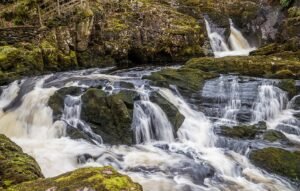
Ingleton, located in North Yorkshire, England, has a rich and diverse history that spans thousands of years. The village is situated in the scenic area of the Yorkshire Dales, which has long been inhabited and influenced by a variety of cultures.

In the grounds of Paradigm Sharpening, Nelholme, West Burton, on both sides of the roads are what looks like two natural amphitheatres, which may have been enhanced by the local people are used as a meeting place. I can’t find any research on this location, but it is of sufficient interest to record.

The Bronze Age discoveries in Mitchell Laithes Farm, Ossett, West Yorkshire, offer an important glimpse into the region’s ancient past. Archaeological appraisals, particularly the one conducted in 2007 at Mitchell Laithes Rye Royds, have unearthed evidence of short episodes of occupation dating back to 3500-2000 BC.
Jun 19

Prehistoric Yorkshire is a landscape rich with history, revealed through various archaeological finds that offer a glimpse into the ancient past. The oldest evidence of human activity in this region dates back to around 125,000 years ago, but it is the later periods, particularly the Iron Age, that have yielded significant discoveries related to ploughing and farming.

Hadrian’s Wall, known to the Romans as Vallum Hadriani, was a grand fortification stretching across the width of what is now Northern England. Constructed on the orders of Emperor Hadrian in AD 122, the wall was a symbol of Roman power and engineering prowess.
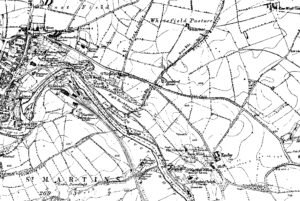
Scott’s Dyke, also known as Scots Dyke or Scots Dike, is a significant linear earthwork stretching approximately fourteen kilometres from the River Swale to the River Tees, this ancient structure is believed to date back to the period between the first century BC and the first century AD.
 NLS Map Explorer
 Google Earth
 Google Maps
 Lidar Finder
 TMA
TMA
 Megalithic Portal
 Yorkshire Arch. Air Mapping
 ADS
ADS
 Brigantian Adventure FB Group
Stone Bothering FB Group
Stone Faces FB Group
Brigantian Adventure FB Group
Stone Bothering FB Group
Stone Faces FB Group
 Heritage Gateway
 ARCHI® MAPS: UK
 Atlas of Hillforts
 Portable Antiquities
 British History Online
Brigantes Nation FB Group
British History Online
Brigantes Nation FB Group

