Venutius

Author's posts

Mote of Mark, Dumfries

Glossaries Glossaries [su_button url=”https://brigantesnation.com/latin-roman-terms”]Latin (Roman) Terms[/su_button] [su_button url=”https://brigantesnation.com/technical-terms”]Technical Terms[/su_button] [su_button url=”https://brigantesnation.com/archaeological-terms”]Archaeological Glossary[/su_button] Devil’s Arrows, North Yorkshire The Devil’s Arrows – BoroughBridge Introduction This Bronze Age site comprises of three large standing stones, it is thought originally Read more Kirklington Tumulus, North Yorkshire Kirklington Tumulus “Prehistoric vessels dug out of the mound at Stapely Hill, Kirklington, …

Continue reading

Arka Unskel hillfort, Highlands

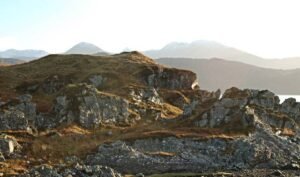
Arka Unskel is 2½ miles ESE of Arisaig at NM693839 and has also been known as Arisaig Fort, Ard Ghaunsgoik and Ard Ghamhgail. Described as on a promontory on the north side of Loch nan Uamh with a heavily vitrified wall.

Vitrified Forts Distribution

hillfort in Highland, Scotland, UK, Rubh' Ard Ghaunsgail

One of the great mysteries of classical archaeology is the spartan worldwide distribution of vitrified forts, except for Scotland and France. However, there are a number in the wider world, especially Europe. Here is the current breakdown

Why Vitrify a Fort?

Tap o' Noth - geograph.org.uk - 93164

Originally, it was thought that the forts had become vitrified due to an enemy attack. A theory proposed by Childe in the 1930 thought it was that it was invaders, not the builders, who were assaulting the forts and then setting fire to the walls with piles of brush and wood

How to Vitrify a Fort

Tap O Noth Hillfort

Vitrified Forts Distribution One of the great mysteries of classical archaeology is the spartan worldwide distribution of vitrified forts, except for Scotland and Read more Why Vitrify a Fort? Originally, it was thought that the forts had become vitrified due to an enemy attack. A theory proposed by Childe Read more Classification of Vitrified Forts …

Continue reading

Classification of Vitrified Forts

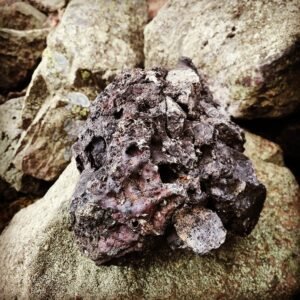
Very vitrified. Possibly part of the pictish fort that was here.

Archaeologists have suggested ways to organise the very varied “vitrified forts” into formal classes – especially schemes that distinguish forts by how much and what kind of vitrification their ramparts show. Below is a digest of the main classification ideas that have been proposed in the literature and how researchers actually use them in field reports and laboratory work.

L’enigme des forts vitrifies

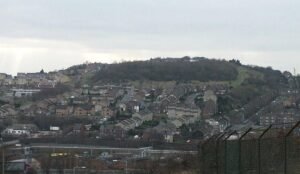
Wincobank Hillfort, Sheffield

C’est lors d’un voyage en Ecosse, au cours de l’été 1997, que nous avons entendu parler pour la première fois de forts vitrifiés. C’était au château d’Urqhart, au sud d’Inverness. Les monuments historiques fermant tôt, dans ce pays, nous ne pûmes voir que de loin cette impressionnante forteresse en ruine du XIIe siècle qui domine la rive occidentale du Loch Ness. Nous nous contentâmes juste de faire des photos au téléobjectif depuis le parking et de lire les panneaux retraçant l’historique du site.


Vitrified Forts Gazeteer

Castercliff Vitrified Hillfort

Celtic Heads Celtic Head from Witham, 2nd c B.C. (British Museum) “Celtic” carved heads are found throughout the Read more Timeline 60BC – 138AD This timeline is focussed on the British Celtic culture and those cultures which had influence on the British Celts. It Read more Heads at St Michael, Kirklington An analysis of head …

Continue reading

Mystery of Vitrified Forts

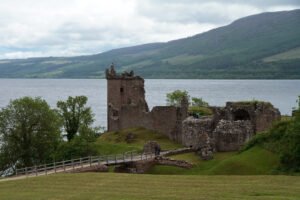
Urqhart Castle

It was during a trip to.Scotland, in the Summer of 1997, that I first heard of vitrified hillforts. It was near Urqhart Castle, south of Inverness. As ancient monuments close early in that country, I could only see from a distance that impressive ruined fortress overlooking the west bank of Loch Ness.

The Vitrified Forts of the British Isles and Europe

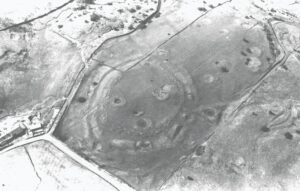
Tap O Noth LiDAR 1m - Thanks to the National Library of Scotland

This page is the “collection centre” for our research into vitrified forts, covering the area largely known as the British Isles.

Contact Us
close slider