The Story of Boltby Scar
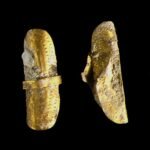
The “Hair Braid” of Boltby
Boltby is a very important ancient site IMO. A gold “hair braid”, was found there, linking it to the Amesbury Archer, buried with two similar hair braids. This also provides a link to the founding of Stonehenge, which helps set a potential scene for a possible “zeitgeist”, of the day.
This hair braid of Boltby, perhaps has a “sister”, though, perhaps, seems may be more of a myth. A tale has been told of it being found over to the west, at a henge close to Ripon, one of the 6 big ones found between Ripon and Thornborough. Fabled to be in Ripon Cathedral now. I need to take a look.
The Amesbury Archer
The Amesbury Archer, is thought to be one of the very first metal workers in Britain. The hair braids have been suggested as being a symbol of that status; as a person who could prospect, mine, refine and work with metals.
This probably also meant he was a spiritual person, and that his mission was the spread of a kind of ritualised belief in an archetype that helped him find his metal.
Only four of those braids have been found. Plus the unconfirmed one at Ripon Cathedral. The other was up at Alston.
All three northern hair braids are in metal extraction zones, if you make my own mighty leap and suggest the Ripon braid was sited in the Yorkshire Dales region.
That gold at Boltby, it is the oldest gold in Yorkshire.
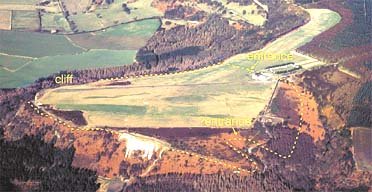
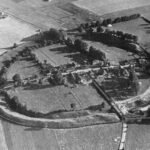
Boltby is an Iron Age hillfort, whose foundations included this oldest gold, which signified the start of the Bronze Age. It is therefore a site which integrated and embodied key stages of the development of our people, on the greatest stage of its day.
Boltby must have signalled a direction of change into the future, one that involved embodying the deepest past.
The Story of Boltby
Now that I have set out the background. Please indulge me a little more, and I can tell you an imaginative story, that may help us understand what was going on.
The “big difference”, between the Iron-age and the Bronze-age, has typically been exemplified, by hill forts and defences. Typically, we see few defensive structures in the bronze-age, and many, in the Iron-age. Let me suggest, therefore, that, here at Boltby, we have a memory of a change in society in general, which has echoes to this day.
Let us say, that, at some point, prior to the Bronze-age, the need for land ownership and control was “less”. People were transitioning from a semi-nomadic lifestyle, to one where they depended upon key resources being available.
But then, we have the discovery of mining, and with this loose legal framework. Those that “got here first”, found themselves being beaten to the metal harvest of the day, by newcomers, who got there “quicker today”.
We can therefore conject, that given this societal pressure, that increasingly, people in the area would start to try to exclude, or make it otherwise clear, that this land/mining prospecting area, was theirs, and private. That these people were starting to form more cohesive tribal units, and that Boltby may well be the place where the first major tribe of the area, actually obtained some kind of identity. From neighbour to kin, it was here, that the transition began.
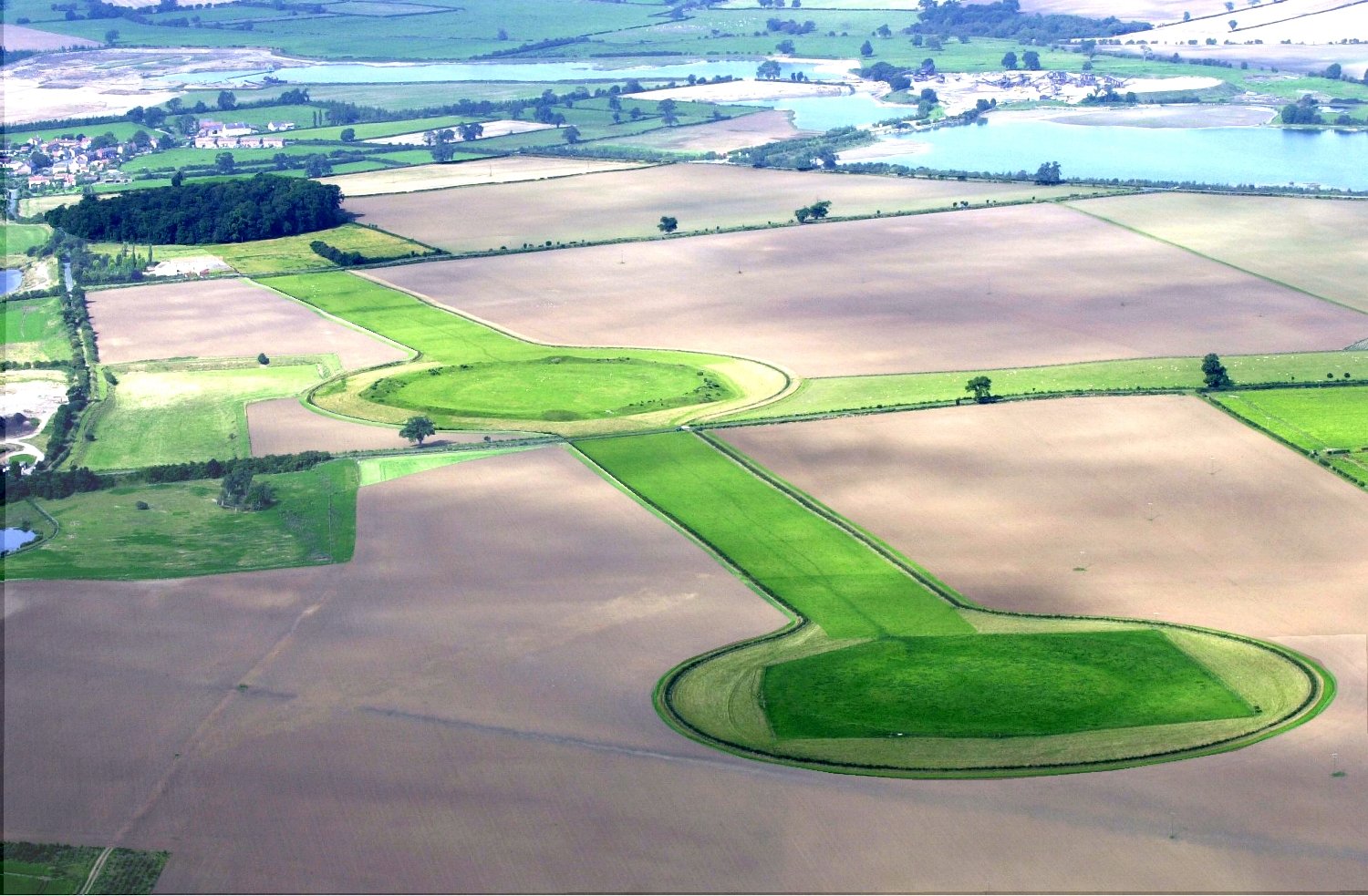
Put in this context, then perhaps what we are seeing at Boltby, and the Yorkshire Moors in particular, in terms of the dykes, ditches and other boundary marking arrangements was a very early societal experiment in how best to organise land use between those that the control group allowed, and were “in” that tribal organisation, and those that were not?
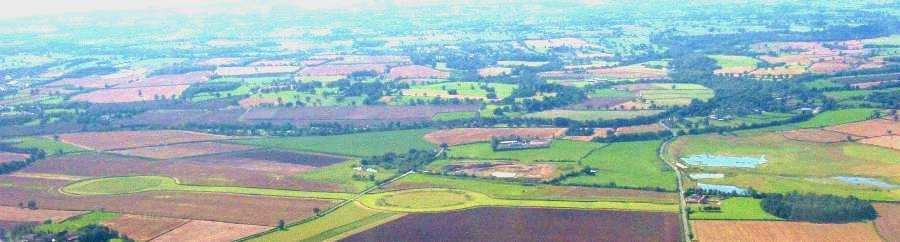
We have the largest defended hillfort area in Britain, via Roulston Scar, and then all of the various dykes and other alignments that cover large parts of the Moors.
Given that in Boltby, we have this very clear entry point to the northern Bronze-Age, and the clear evidence of enclosures of differing types, spreading across this area of specific mining interest. Then perhaps we have an experiment that the rest of the region watched, and perhaps chose to adopt, once the basics had been worked out here?