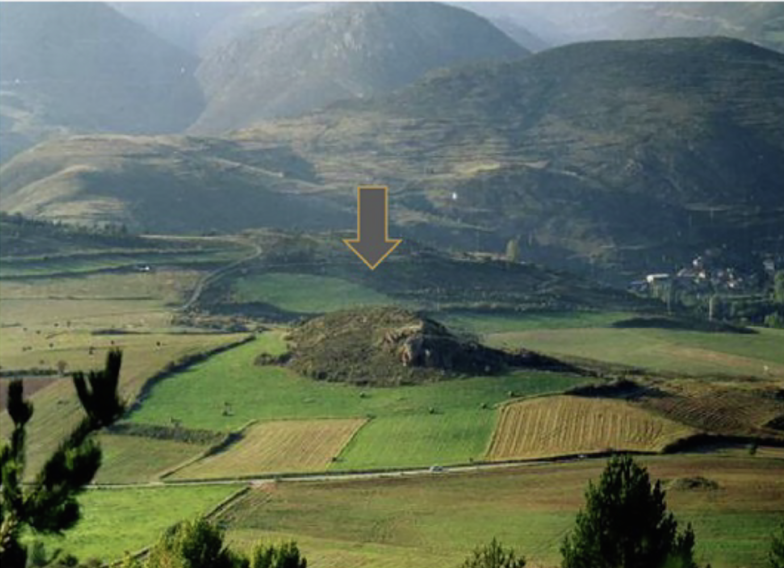
Castro de Trona is an oval enclosure with significant terracing to the west and a large ditch to the east. Read more
Montlleó (Cerdanya, Eastern Pyrenees) — A Gateway to Last-Ice-Age Mobility
Research summary - Long-distance movements during the Last Glacial Maximum in the Pyrenean mountain Range: Fresh insights for Montlleo´ archaeological site (Prats i Sansor, Cerdanya, Spain). Source pdf below.
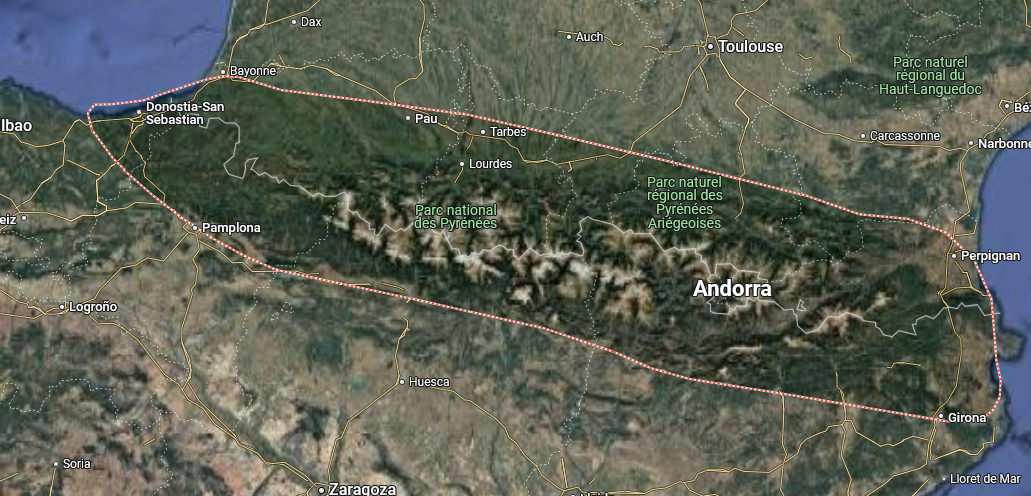
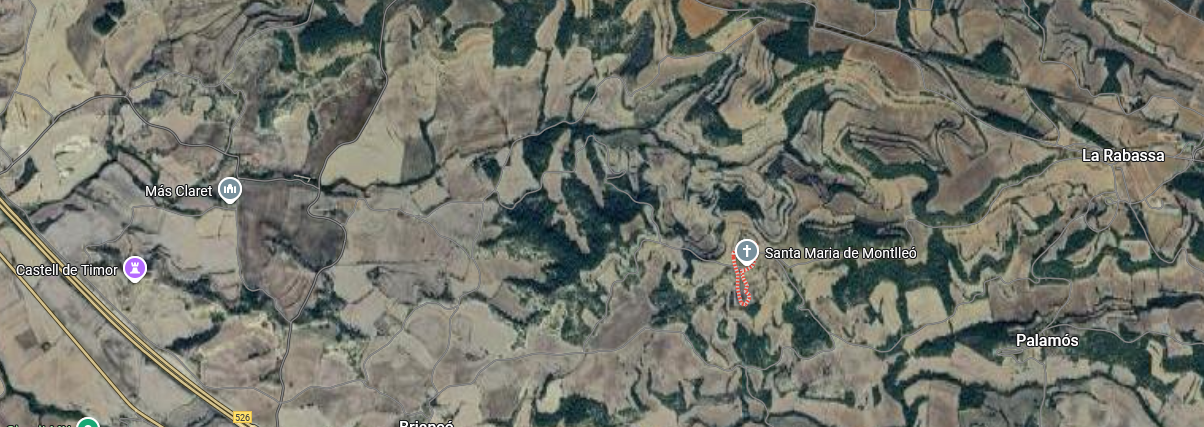
Where is Montlleó, and why does it matter?
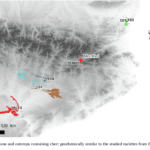
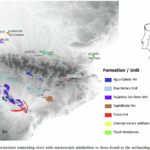
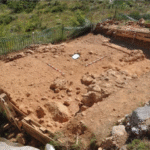
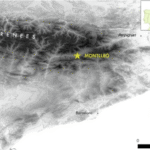
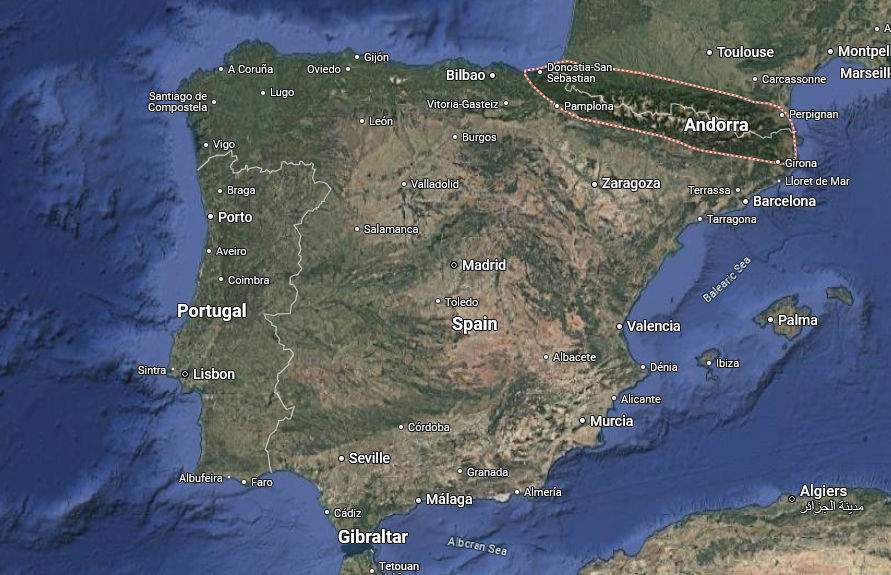
Montlleó sits at 1,144 m a.s.l. on a low knoll in the high, east–west Cerdanya valley of the eastern Pyrenees, a natural corridor between the Bay of Biscay and the Gulf of Lion. Excavated since 2000, the open-air site preserves a 23,000 – 17,000 cal BP occupation sequence that spans the harshest part of the Last Glacial Maximum (LGM) through early deglaciation. Because mountain ice in the Pyrenees retreated earlier than the global LGM, Montlleó shows that hunter-gatherers could exploit altitudes that were once thought permafrost-bound.
Research goals & methods
The project combines:
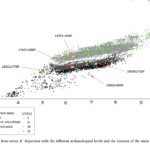
High-resolution spatial plotting of >25,000 lithics.
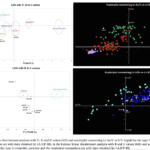
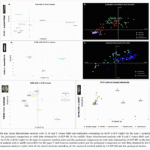
Archaeopetrology & LA-ICP-MS geochemistry to fingerprint chert and rhyolite sources on both sides of the Pyrenees.
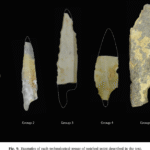
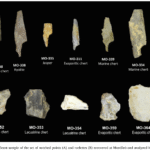
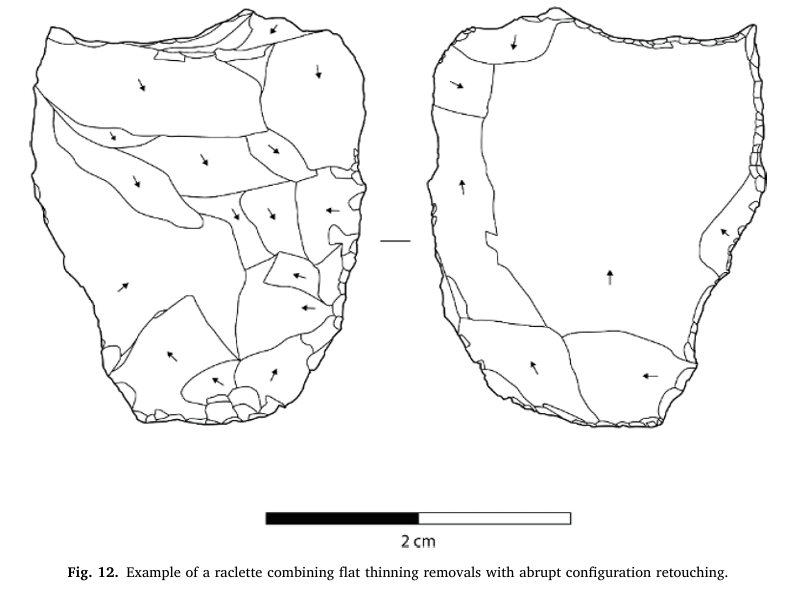
Techno-typological study of diagnostic tools (Upper Solutrean notched points; Badegoulian raclettes).
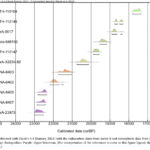
Bayesian modelling of 14 C dates on bone and charcoal (IntCal20) to refine site chronology (see Table 1 in the article).
Stratigraphy & dating
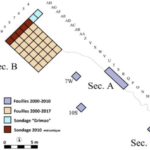
Micro-spatial analysis isolates three clear cultural horizons in Sector B :
Level
Culture
Cal BP (95 % range)
Key markers
IV
Upper Solutrean
23,000 – 22,000
Notched points, wide raw-material network
III
Badegoulian
22,000 – 21,000
Raclettes, tighter southern sourcing
I
Lower Magdalenian
20,000 – 17,500
Bladelet industry with inverse retouch
A brief hiatus separates the Solutrean and Badegoulian levels, confirming a true cultural succession.
Lithic technology & raw-material sourcing
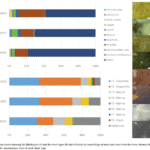
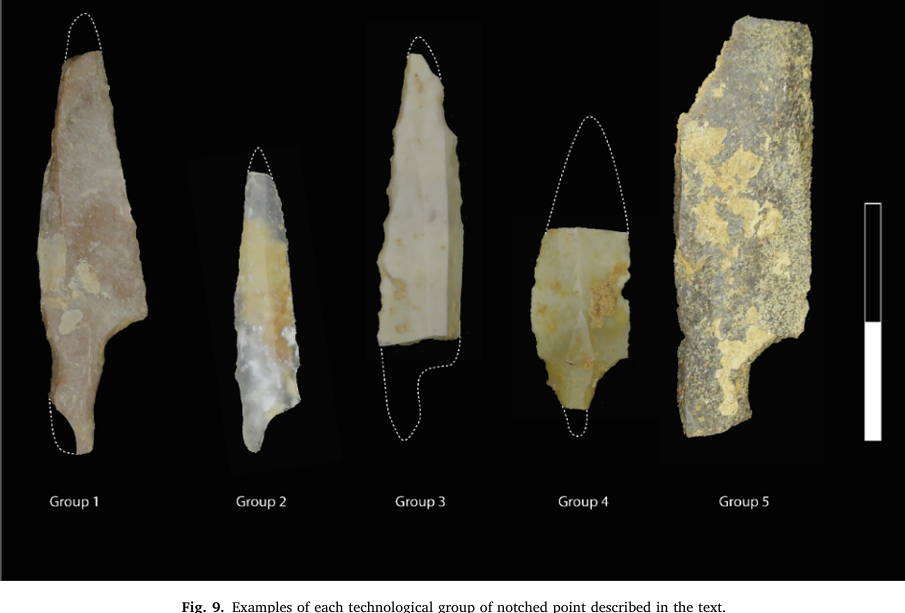
Upper Solutrean: five techno-groups of notched points reveal both classic French “Salpêtrien” traditions and local innovations; cherts and rhyolites trace to the Corbières Massif, western Pyrenees flysch, the Middle Ebro Basin and local Cadí rhyolite — evidence of long-distance (>200 km) circulation across mountain corridors.
Badegoulian: 11 raclettes show a strong preference for evaporitic Tremp-Fm cherts from the southern Pyrenees and fewer imports from Corbières and the Ebro Basin, implying a more restricted catchment than their Solutrean predecessors.
Lower Magdalenian: still under study, but preliminary data suggest renewed broad-scale mobility.
Implications for LGM hunter-gatherers
Montlleó provides the earliest secure evidence of high-altitude open-air occupation in the Pyrenees during the global cold peak, demonstrating rapid adaptation to deglaciating niches.
Contrasting procurement strategies show that territorial ranges contracted and expanded in step with climate oscillations and cultural change.
The site corroborates two trans-Pyrenean corridors used during the LGM: the Basque “crossroads” in the west and the Cerdanya valley in the east.
Quick primer on the Last Ice Age for context
Date (Ka cal BP)
Climate / culture snapshot (W. Europe)
≈115 – 30
Early–Middle Weichselian/Devensian glaciations; Neanderthal Mousterian, later transitional techno-complexes.
30 – 26
Onset of Upper Palaeolithic; Aurignacian spreads with Homo sapiens.
26 – 19 (LGM)
Global ice maxima. In W. Europe: Gravettian wanes; Solutrean (c. 24–20 ka) thrives in SW France & Iberia with heat-treated bifacial technology. Vast steppe-tundra dominates; refugia persist in northern Iberia and southern France.
22 – 20
Badegoulian emerges during cold GS1.1c; characterised by raclettes and heavy-duty flake tools; signals economic stress and territorial tightening.
19 – 14.7
Rapid warming (Bølling–Allerød); Magdalenian explosion of art and long-range exchange; re-colonisation of Northern Europe.
glacial pulses repeatedly compressed human ranges into southern refugia, yet groups kept inter-regional contacts through corridors such as Cerdanya. Montlleó captures this dynamism in a single slope above today’s ski-resorts.
Importance in a Brigantian Context
Comparison point: Montlleó’s terrace-like occupation package mirrors upland open-air sites in Britain (e.g., Creswell Crags) but under far harsher conditions.
Methodological model: the integrated geochemical sourcing and micro-GIS approach offers a toolkit applicable to British flint-scatters.
Pan-European narrative: understanding Pyrenean mobility helps frame Britain’s own Late-Glacial recolonisation after c. 15 ka.
Suggested further reading
Sánchez de la Torre et al. 2025. “Long-distance movements during the LGM in the Pyrenean Mountain Range.” JAS: Reports 61.
Calvet M. et al. 2011; Reixach T. et al. 2021 – Pyrenean glacier chronologies.
Banks W.E. et al. 2011 – Eco-cultural niches of the Badegoulian.
Boccaccio G. 2021 – The Salpetrian in the upper Rhône.
A complete silver Scottish twelve shillings coin of James VI of Scotland and I of England, eighth coinage post-dating accession to English throne, dating to 1603-1625, Lys initial mark. Reverse has a shield with arms of [...]
A silver Post-Medieval shilling of Elizabeth I, third issue with ‘A’ initial mark dating to 1583-1585. Mint of London. As North Vol 2, p.136, no.2014. [...]
A lead alloy pipe tamper dating to the 17th century. The plate has moulded decoration to both sides depicting Charles I (facing right) and Henrietta Maria of France (facing left). Both images are contained in [...]
A damaged lead-alloy Medieval pilgrim's ampulla, 50mm in length and 35mm wide, with a round bodied flask with a flaring open top which is partially complete. One side of the flask body has traces of moulded [...]
An incomplete Medieval cast copper alloy buckle plate, dating to c. AD 1100-1400. The plate is missing its buckle and part of its sprues. The buckle plate is sub-rectangular in plan. Projecting from one long edge [...]
A Roman copper-alloy nummus of the House of Valentinian , dating to AD 364-7 (Reece Period 19), GLORIA RO-MANORVM reverse type depicting the emperor with right hand dragging captive right and holding a labarum in left hand. Mint of [...]
A Post-Medieval copper alloy farthing of Charles I (AD 1625-1649), dating to AD 1636-1644. Rose type 2, with sceptres in saltire through single crown. Mint of London. Unclear initial mark. North (1991: 165) no. 2291. [...]
A clipped and heavily worn Roman copper alloy nummus of Gratian (AD 367-383) dating to the period AD 367-378 (Reece period 19). SECURITAS REI PUBLICAE reverse type depicting Victory advancing left, holding a wreath and palm. Unknown mint. [...]
A silver Roman siliqua of Honorius (AD 393-423) dating to the period AD 397-402 (Reece Period 21) minted in Milan VIRTVS ROMANORVM reverse type depicting Roma seated left on cuirass, holding Victory on globe and spear. Hoxne, p. 145, no. [...]
An incomplete Roman composite plate brooch probably dating to AD 100-200. The brooch is missing it's pin and part of the top and bottom circles. The brooch is flat in cross section and probably originally consisted of [...]
Fragment from a probable buckle frame dating to the Post Medieval period (c.AD 1720-1790). The fragment is broadly rectangular in plan and includes a short section of the corner of the buckle frame. The fragment includes the [...]
Fragment from a buckle frame dating to the Post Medieval period (c.AD 1720-1790). The fragment is broadly C shaped in plan and D shaped in profile. It consists of two corners and one side of a sub-rectangular [...]
A complete copper alloy bovine (bull's head) vessel / bucket mount, dating to the Roman period (c. AD 50-200).The cast copper alloy mount is a sub-inverted triangle with a pointed lower tip and slightly waisted sides to form the nose.The [...]
An incomplete copper-alloy early Medieval stirrup strap mount of uncertain or unclassified type, dating to c.AD 1050-1150. The central part of the object survives with parts of the open work broken off on all sides except [...]
A near complete Medieval-Post Medieval cast copper alloy buckle with integrated plate dating to the period c.AD 1250-1500. The buckle is missing its pin.It has a rectangular frame, which has a sub rectangular cross-section. The integral plate has [...]
A very worn copper-alloy Roman radiate or nummus of unclear ruler dating to AD 260-402. Unclear reverse type, unclear mint.The coin is chipped around its circumference. [...]
A very worn Roman copper alloy radiate of uncertain emperor dating to the period AD 260-275 (Reece period 13). Unclear reverse type depicting. Unclear mint. [...]
An incomplete Medieval cast copper-alloy rectangular buckle with integral looped plate, dating to c. AD 1200-1400. The buckle is missing its pin. The buckle comprises a rectangular loop and an integral plate. The plate is made [...]





 Where is Montlleó, and why does it matter?
 Research goals & methods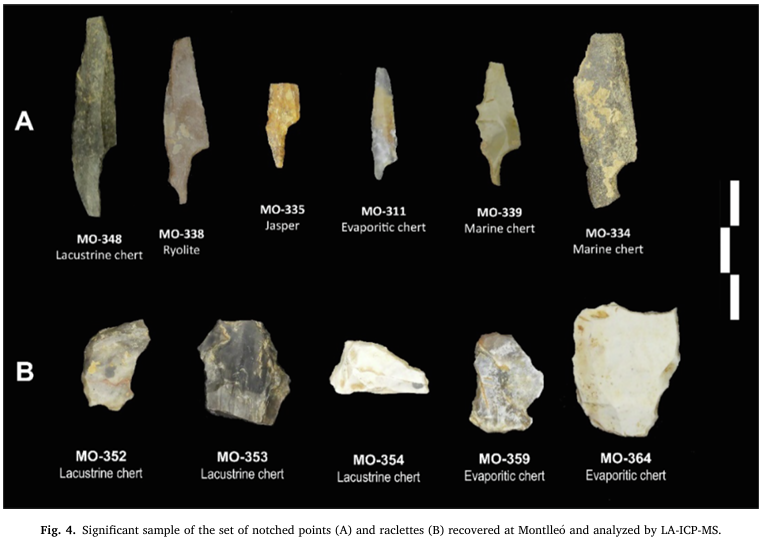
 Stratigraphy & dating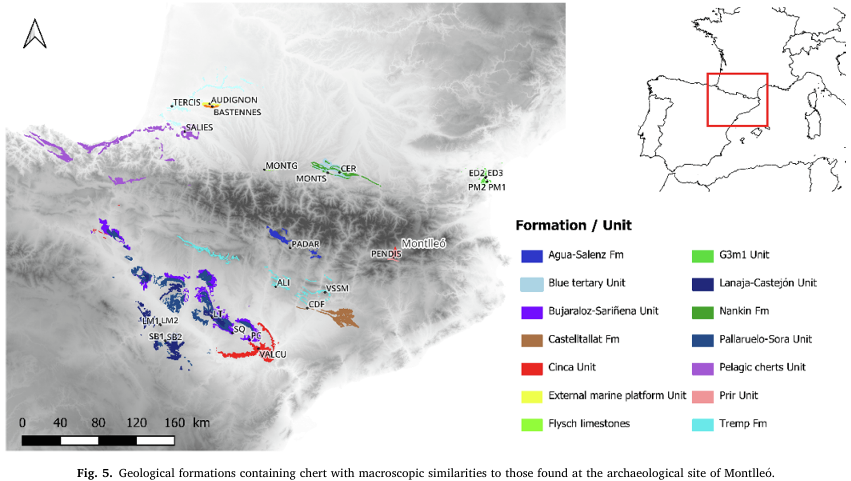
 Lithic technology & raw-material sourcing