Julius Caesar made the first significant Roman attempt to conquer Britannia in 55 BCE during his campaign in Gaul. He Read more
Scoles Coppice
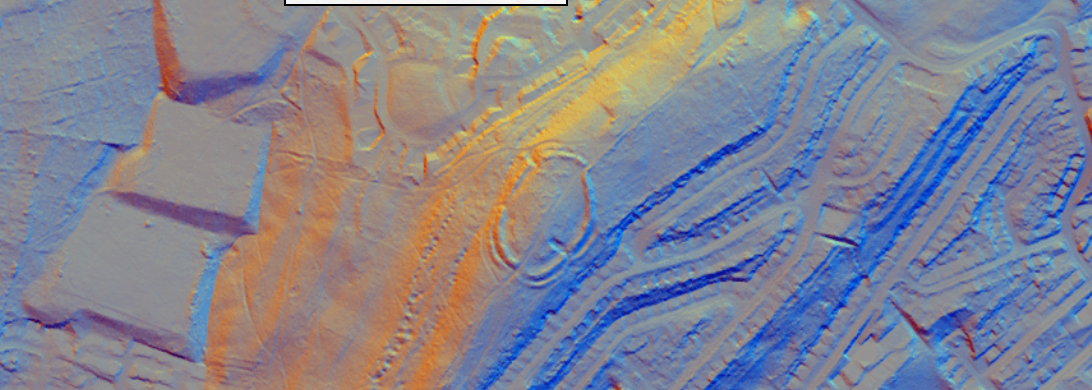
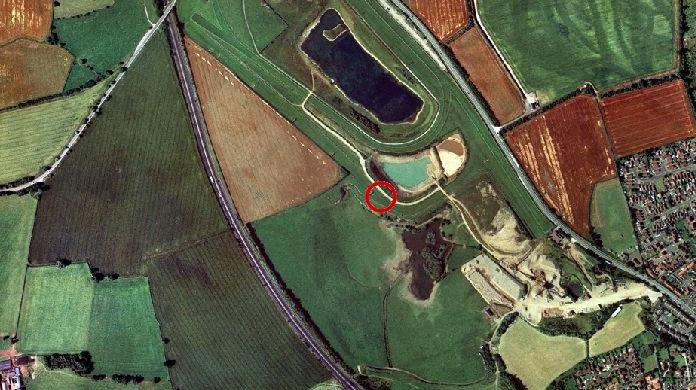
Scholes (or Scoles) Coppice Camp (sometimes called “Caesar’s Camp”) lies just north-west of Kimberworth in Rotherham, atop the same Magnesian Limestone ridge that carries the Roman Rig. Its grid reference is roughly SE 436 937, placing it only 200–300 m to the north of the Rig’s northern branch (heritagegateway.org.uk).
Site & Structure
Scholes Coppice Camp is a classic small Iron-Age enclosure, roughly oval in plan, c. 60 × 45 m internally. It is defined by:
A substantial outer bank of earth and limestone rubble, surviving to between 2 m and 5 m in height and up to 15 m across at its widest § (en.wikipedia.org).
A parallel ditch on the interior (downslope) side of the bank, also about 15 m wide overall.
No clear surviving entrance, though subtle re-entrant gaps on the east and west sides may mark original gates (heritagegateway.org.uk).
Geology & Geography
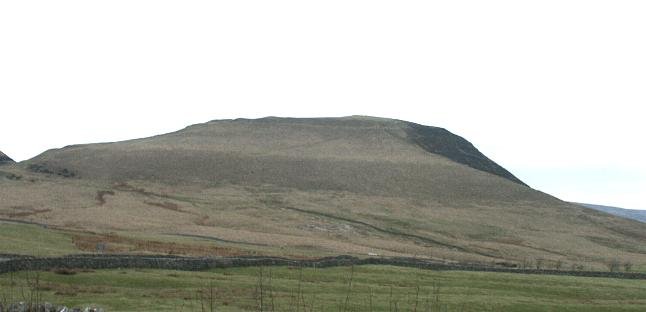
The camp and the Rig both exploit the Magnesian Limestone ridge that overlooks the Don Valley. Here, thin soils over limestone provide good drainage—essential for both defensive Earthworks and the Iron-Age stock a community would have kept within the enclosure. Springs at the limestone–shale contact lie just to the south, supplying water for the inhabitants (en.wikipedia.org).
Archaeological Investigations
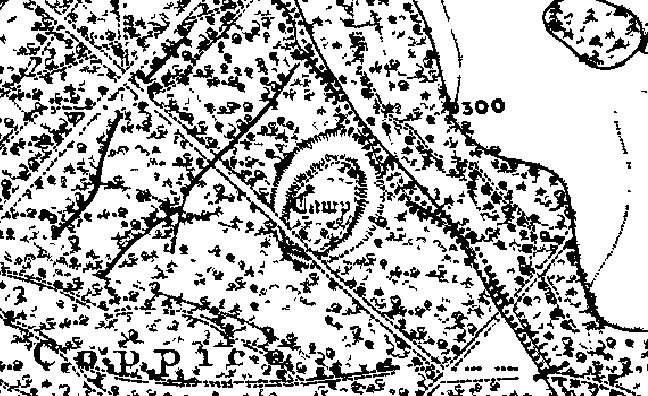
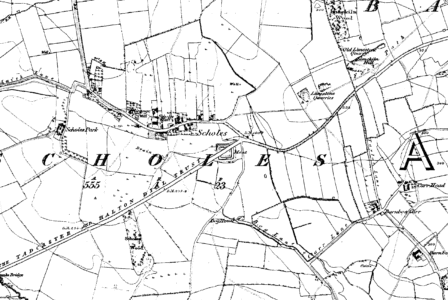
This is the 1850's os map showing Scoles Coppice camp, the Roman Rig dyke runs a few hundred meters of the camp.
Atkinson, Latham & Sydes (1992) conducted trial-trenches across the bank and ditch. They recorded a turf-revetted revetment facing on the bank’s outer side, and recovered a scatter of coarse Iron-Age pottery and struck flints from the ditch fill—but no Roman material—indicating a primarily pre-Roman date (researchframeworks.org).
South Yorkshire Historic Environment Research Framework (2018) notes that the enclosure likely functioned alongside nearby hillforts (e.g. Wincobank) as part of a Brigantian territorial network, controlling movement along the ridge and overseeing lowland routes (researchframeworks.org).
Field survey (Probyn 2000) mapped the enclosure precisely and showed that the Rig skirts its southern perimeter without physically connecting—suggesting contemporaneous but independent defensive features rather than one continuous dyke (scispace.com).
Relationship to the Roman Rig
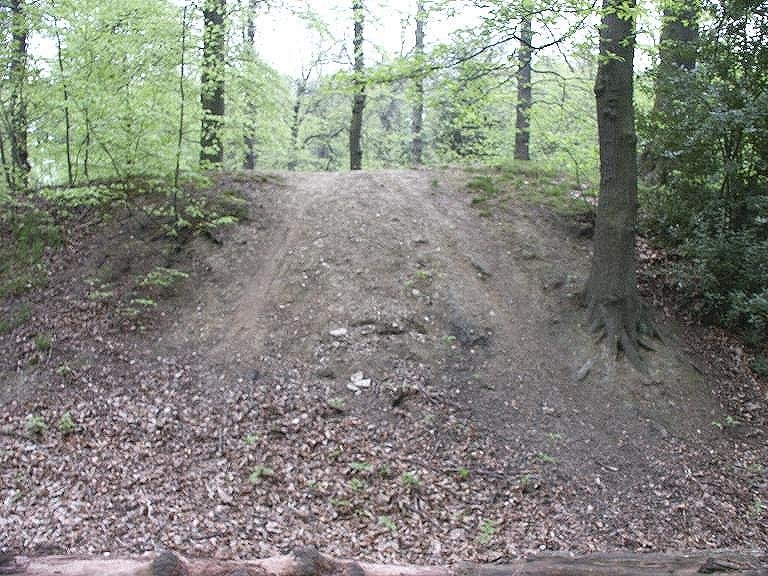
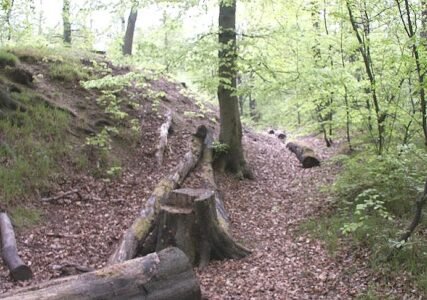
Pictures of Scoles Coppice rampart, taken from the ditch.
Scholes Coppice Camp and the Roman Rig together form a composite frontier system on this ridge. The camp sits a little above the Rig’s bank-and-ditch, allowing watchmen a commanding view south toward the Don floodplain.
Although earlier antiquarians once assumed the Rig was a Roman road, we now understand both earthworks to be non-Roman, most likely Iron-Age (1st century BC–1st century AD) and tied to Brigantian defensive strategies (researchframeworks.org).
The lack of a formal gate or gap where the Rig meets the camp implies that each monument was built for its own purpose—the camp as a defended settlement or refuge, the Rig as a linear boundary or intervisibility horizon across Brigantian territory.
Scholes Coppice Camp is a well-preserved Iron-Age enclosure whose robust bank and ditch stand in close proximity—but not direct connection—to the Roman Rig. Together they mark out a fortified ridge-top complex that governed access to South Yorkshire’s Don Valley during the late first millennium BC.
"Scholes Wood, hill-slope fort. This is an oval site of about 1 acre, It is protected by a bank and ditch and has an original entrance at the NE. The main bank rises 3ft. above the interior. The site is overlooked by higher ground NE, W and S. Date, c. 1st century BC - 1st century AD. : but some believe it is not prehistoric" Guide to Prehistoric England, Nicholas Thonas, 1960.
A silver Medieval half groat of Edward IV, first reign, light issue, type IX dating to 1464-1470. Rose initial mark and trefoils by neck of obverse bust. Canterbury mint, royal issue. As North 1589. [...]
A fragment of a Roman copper-alloy brooch, interpreted as a trumpet derivative of Wroxeter type, dating to AD 75-200. The surviving element comprises the head, upper decorative projection and a reduced bow/foot. The head is box-like [...]
A fragment of a cast copper alloy Anglo-Saxon brooch, probably a radiate-headed type dating from the mid sixth century AD. Only the foot plate remains; this is triangular with flanking knops at the junction with [...]
A Medieval silver penny of Edward II (AD 1307-1327), Withers Type 30, North Class 11, not further defined,dating to AD 1310-1314. Mint of London: Ref: Withers and Withers 2001: 32. [...]
An incomplete Post Medieval copper-alloy rowel spur dating to circa AD 1600-1700. The spur consists of a small portion of both arms - terminating in old breaks - neck, and rowel box. The box is projects from the upper [...]
A complete Medieval to Post Medieval lead-alloy loom weight dating to circa AD 1200- 1800. It is circular in plan and rectangular in section. It has a central hole of 10mm in diameter. Weights of this [...]
An incomplete Medieval copper-alloy buckle dating to circa AD 1250-150. The extant piece consists of the pin, likely from an annular buckle.The pin shaft is rectangular-sectioned. It has a loop at one and tapers into [...]
A complete Medieval to Post Medieval signet ring dating to circa AD 1400-1600. The ring comprises a broadly circular hoop with expanded sub-oval bezel when viewed from underneath. The shoulders and hoop are plain. The hoop [...]
An incomplete Medieval copper-alloy buckle dating to circa AD 1350-1550. The surviving piece consists of the frame. It is circular in plan with a central offset bar creating two D-shaped loops. The frame is plano-convex [...]
A near-complete Late Iron Age to Roman copper-alloy Colchester brooch dating to circa AD 40–70. The brooch is T-shaped in form, comprising a transverse head of flat wings and a long, tapering bow. The wings are [...]
A cast copper alloy hooked fitting of Medieval date. The rear end has a flat attachment tab with a rivet at the centre. In front of this is a moulded zoomorphic collar in the form [...]
A Roman copper-alloy nummus of the House of Constantine (AD 306-364) dating to circa AD 318-324 (Reece Period 16). BEATA TRANQVILLITAS reverse type depicting altar inscribed [VOT/IS/XX]. Unclear mint. [...]
An incomplete copper alloy toilet set of Medieval date comprising a rectangular blade from a pair of tweezers, which tapers in profile to a to a wedge shaped terminal. The other blade has broken off and the [...]
A decorated rectangular cast copper alloy plate from a late Medieval composite strap end. The plate has broken into two portions; the rear edge is incomplete and the terminal is rounded. The facing side of [...]
An incomplete large early Neolithic leaf shaped arrowhead struck from a brown flint. The arrowhead is broadly "kite" shaped with symmetrical convex sides (cf. Butler (2005), p 123, Type 2C) and has been bifacially worked [...]
Two fragments from a late Medieval to early Post-Medieval copper-alloy purse bar, dating to AD 1450 - 1550 and of Williams class A1. One arm and the loop remain. The arm has a globular terminal with a waisted [...]
An Iron Age continental cast copper alloy potin of the east central Gaulish region (eastern France, Germany and Switzerland) possibly attributable to the Sequani. Obverse: large head, left (potin à la grosse tete). Reverse: horned [...]