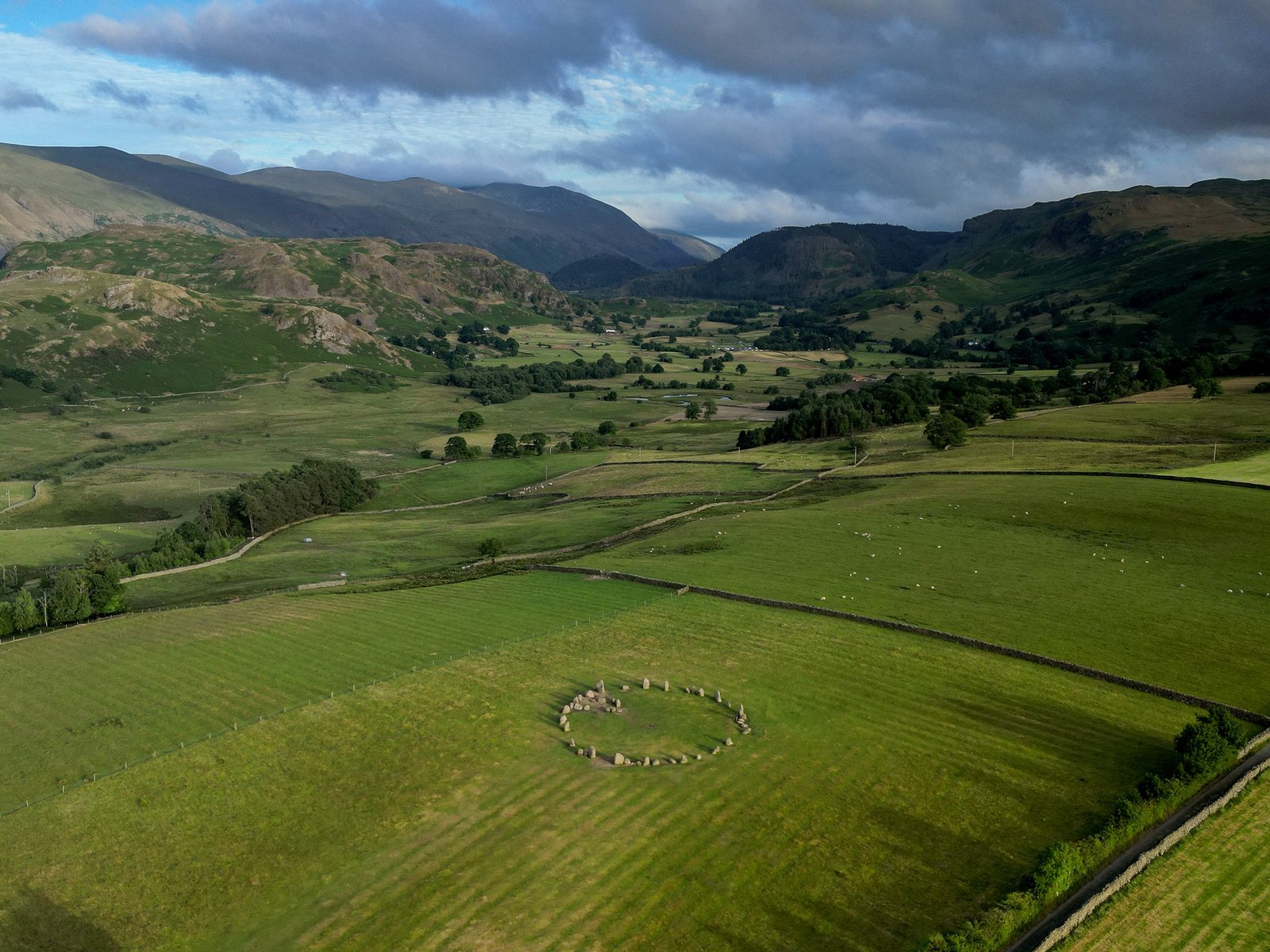
Castlerigg stone circle is one of the oldest and most scenic megalithic monuments in Britain, dating back to the late Read more
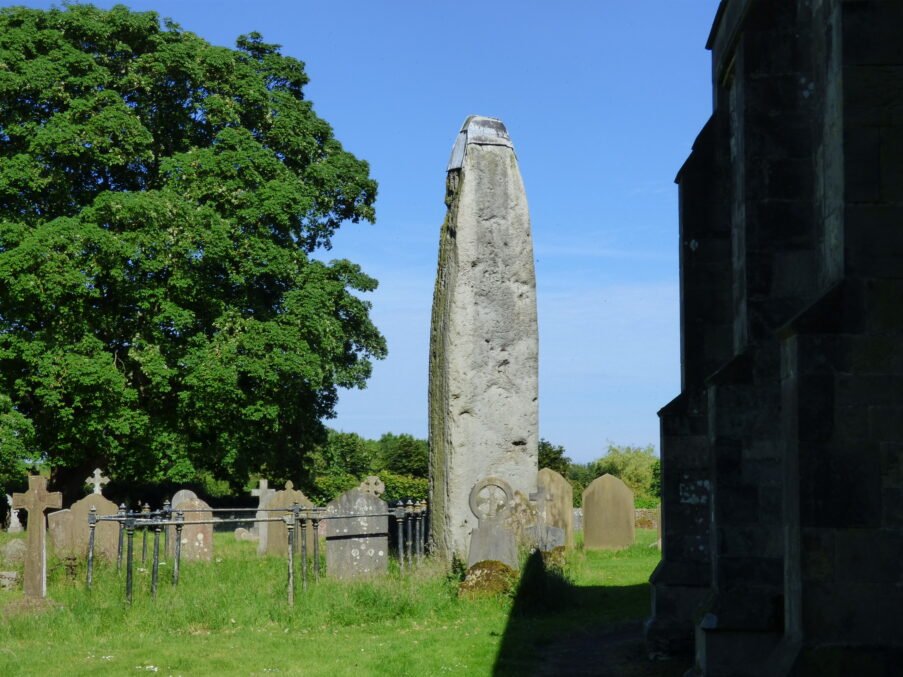
Rudston is England's tallest Standing Stone and it's presence gave the name to the village that it's located in. It's presumed to be of Neolithic origin. It's just over 25ft high. The village has definite ancient origins, being alongside the Roman Road running from York to Sewerby, The village is also the site of a Roman Villa.
The stone was hewn from glomerate moorstone Grit, possibly originating from near Whitby, which is almost 40 miles away.

Copper alloy coin weight. Cast square double-sided weight from Antwerp or a Low Countries makerObverse description: facing half-length monarch holding orb left with poleaxe, cross or sceptre vertical rightReverse description: a hand within a circle, [...]
Silver coin. Penny of Edward I (1272-1307) or Edward II (1307-1327), class 10cf3 issue of 1300-1310, London mint, possibly lightly clippedObverse description: facing bust with broad bifoliate crown, pointed chin, drapery of angled wedges, initial [...]
Medieval or post-medieval copper-alloy symmetrical double-looped buckle frame with a fragment of the pin. Each loop is oval (or between D-shaped and oval). The dividing bar is narrow and triangular in cross-section. The remainder of [...]
A silver penny of Edward IV (first reign, 1461-70) heavy coinage, class iv, dating to c.1461-65. Mint of Durham.Diameter: 15mm; thickness: 0.6mm; weight: 0.8g.Cf. North (1991) vol 2, p.84, no.1544. [...]
An incomplete copper-alloy finger ring probably dating to the Late Medieval to Post Medieval period.Comprising of an oval bezel and the curved tapering shoulders of the hoop that are D-shaped in cross-section and both terminate [...]
A cast lead half-ounce disc weight probably dating to the Late Medieval to Post Medieval period.Sub-circular and flat disc with no official markings. The surface has several scratches and scrapes and displays a light buff colour.Diameter: [...]
An incomplete Post-Medieval copper alloy 'tombac' button (tombac being a brass alloy with high copper content and 5–20% zinc content), consisting of the upper domed plate, dating from c. AD 1600-1800. Only the domed front [...]
A thin, uneven strip of rectangular sectioned copper alloy, possibly with a small hooked terminal, however this could also just be from cutting. It may be waste material, but the patina suggests it has some [...]
A small and thin Roman nummus / minim of fourth century date. The coin is slight dished and is extremely worn, however a left-facing bust can be discerned under a magnifier, but is difficult to see [...]
A Neolithic flint arrowhead. The arrowhead is of the transverse or chisel form, being sub-triangular in plan and worked all over on both sides. The striking platform and bulb of percussion have been removed. The [...]
A flint end scraper dating to the Neolithic or Bronze Age. The scraper is made from a primary flake of dark brown flint. A cream-grey coloured cortex covers around 80% of the dorsal surface. Fine, [...]
An incomplete, copper alloy, Roman finger ring, dating to c. AD 43-300.Only the bezel and shoulders of the ring remain, the rest of the hoop is missing. The bezel has an oval-shaped, recessed profile, within which are [...]
Two fragments of an early Anglo-Saxon cruciform brooch. The fragments comprise the bow. The bow is rectangular in plan, convex, and has a moulded transverse collar at the top and the bottom. A thin moulded [...]
A medieval copper alloy buckle, circa 1200-1400. The frame is rectangular and has a narrowed bar. The sides of the frame are flat. The lip is formed of a large, circular knop. This is convex [...]
An incomplete copper alloy pin of Middle Saxon date, circa AD700-850. The pin has an undecorated, flattened globular head. A small, moulded collar is located at the top of the shank. Most of the shank [...]
A possible fragment of an early Anglo-Saxon copper alloy girdle hanger. The fragment is a thin rectangular shank and probably comes from the upper part of a girdle hanger. No decoration is visible. This item [...]
A post-medieval copper alloy buckle with double oval frame. An integral central bar divides the frame and houses a copper alloy pin. The bar extends slightly beyond the edge of the frame. A moulded triangular [...]
A complete flint retouched blade of probable Mesolithic to early Neolithic date. Small secondary flake. A small amount of short, semi-parallel, abrupt retouch and a notch, which appears to be deliberate, in the centre of the [...]
A complete flint retouched flake of probable Neolithic to early Bronze Age date. Small tertiary flake. Two notches, which appear to be deliberate, along the distal edge. Narrow butt, prominent bulb. Medium patination. [...]