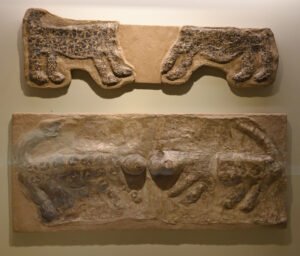
At its core the “hero” is the figure who steps out of ordinary society, confronts chaos or a monster, and returns (or dies) having secured order for the group. In Jungian and comparative-myth terms it sits in the “warrior-champion” slot of the collective story-board; evolutionists would say it crystallises the survival value of decisive coalition leadership in small bands.
Period: Paleolithic
Aug 02
The hero archetype and Lugh
- Filed under Breogans, Britain, Bronze Age, Castro Hillfort, Celtic Gods, Celtic Life, Celtic Tribes, Dark Ages, Dragons, Early Christian, Early Medieval, France, Giants, Ireland, Iron Age, Lugh, Medieval, Mercury, Mesolithic, Myth and Legend, Neolithic, Palaeolithic, Portugal, Roman, Roman Culture, Roman Gods, Spain, The Devil, Viking, Wales
- !Kung, Ache, Achiles, Arjuna, Arthur, Balor's Eye, Bee, Bees, Bhagavad Gita, britain, Buffalo, Castro, Catalhoyuk, Cattle, Cúchulainn, Deity, Divinity, Egypt, Embodiment, France, Galicia, gaul, Geryon, Gilgamesh, Giraffe, Gobeki Tepe, god, Greogans, Haasi, Hadza, Hector, Heel, Heracles, Hercules, Hero, Hero Archetype, Hoan, Hunter Gatherer, Hydra, Integration, Inuit, ireland, Iron Age, Ivory, Kalahari Desert, Kudu, la tene, Lagash, Legend, Lion-Man, Lugh, mammoth, Mercury, MeriamTurtle, Mesopotamia, Monotheistic, myth, Narmer, Naro, Nuliajuk, pagan, Paraguay, Pharoh, Poigs, Proto-Hero, Raven, religion, Roman, Salish, Salmon, San Culture, Seal, Sedna, Serpent, Snake, Sockeye, Sorcerer, Spain, spear, St Michael, Sumer, Synchronicity, T-Pillars, Ulster, Zebra
- Leave comment
Jun 11
Guide: Spoil Heaps
- Filed under Archaeology, Guide, Industrial Heritage, Landscape Archaeology, Landscape feature, Mining, Spoil Heaps
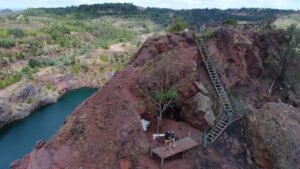
These are artificial hills made from the unwanted rock, shale and tailings that come up with coal, metal ore, stone or clay when it is being mined or quarried. Because extractive industry is both deep and long-lived, single collieries or pits can generate tens of millions of cubic metres of spoil; pushed out by locomotive, conveyor or tippler wagon and dumped in successive layers, the piles quickly become a distinctive landform.
Montlleó, Cerdanya, Pyrenees – Lithics Study
- Filed under Brigantia Espania, Lithics, Palaeolithic
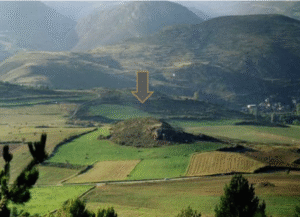
Montlleó sits at 1,144 m a.s.l. on a low knoll in the high, east–west Cerdanya valley of the eastern Pyrenees, a natural corridor between the Bay of Biscay and the Gulf of Lion. Excavated since 2000, the open-air site preserves a 23,000 – 17,000 cal BP occupation sequence that spans the harshest part of the Last Glacial Maximum (LGM) through early deglaciation. Because mountain ice in the Pyrenees retreated earlier than the global LGM, Montlleó shows that hunter-gatherers could exploit altitudes that were once thought permafrost-bound.
Ingleborough Hill – Yorkshire Dales
- Filed under Landscape feature
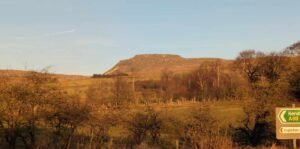
Ingleborough Hill, part of the Yorkshire Dales National Park, is one of the famous “Three Peaks” in the area, alongside Whernside and Pen-y-ghent. It stands at 723 meters (2,372 feet) and has a rich geological and archaeological history.
Articles
- Bronze Age
- Iron Age
- Roman
- Dark Ages
- Early Christian
- Viking
- Saxon
- Medieval
- Vitrified Fort
- Archaeology Guide
- Guide – Introduction to Critical Thinking in Archaeological Research
- Guide – Challenging Assumptions with Free Thinking
- Guide – Congruence in Archaeological Interpretation: Holistic Analysis
- Guide – Critical Thinking: Lack of Evidence Does Not Mean Evidence of Lack
- Guide – Critical Thinking: The Simple Assumption
- Guide – Applying critical thinking to historic and archaeological research
- Guide – Empathic Archaeology Introduction
- Guide – Landscape Archaeology Introduction
- Guide – What is Landscape Archaeology?
- Guide – Introduction to Glacial Archaeology
- Guide – The Flora and Fauna of Prehistoric Britain
- Guide – Landscape Archaeology: Post-Ice Age Landscape of Thornborough
- Guide – Archaeological Periods in Western Europe
- Guide – Visible Remains
- Guide – Hidden Remains
- Guide – Getting Started
- Guide – Landscape Features
- Guide – Agricultural practices through time
- Guide – Introduction to Glacial Archaeology
- Guide: In Depth – Church Doors and Windows
- Guide – Mining
- Guide – Archaeological Terms
- Guide – Glossary
- Latin Translation – Choosing the meaning of AUG
- Reports
- An introduction to Brigantian Druidry
- Brigantia during the Dark Ages
- Celtic Heads
- Finding Bardon – An Arthurian Quest
- Early Christian syncretism and how the old ones hid amongst the new religion
- Rome: The Emperors Claim to Divinity
- Syncretism through the ages
- The Border Reivers
- The Gallus Frontier – Brigantia against the Romans
- The growth of Christianity 50AD – 1100AD
- The Kingdom of Venutius
- The use of the word Lady in relation to water related structures
- The walled gardens of Brigantia
- Yorkshire’s “Sacred Vale” – The Dawn of Brigantia
- Brigantia Espania
- Iberian Peninsular
- Galicia
- Biefing – The Myth of Breogán and the Tower of Heracles
- Briefing – Galicia’s Political History and Separatist Sentiment
- Briefing – Geography and Geology of Galicia
- Briefing – Design of Galician Hillforts
- Briefing – Roman Interaction with Galicia and the Iberian Peninsula
- Church of Santa María de Cambre, Cambre near A Coruña
Categories
- Agriculture (6)
- Field Systems (1)
- ploughing (2)
- Angle (2)
- Archaeological Periods (312)
- Anglo-saxon (6)
- Bronze Age (52)
- Late Bronze Age (1)
- Dark Ages (24)
- Dark Ages Brigantia (9)
- Early Christian (37)
- Early Medieval (8)
- Georgian (9)
- Gothic (3)
- Ice Age (1)
- Iron Age (133)
- Late Iron Age (5)
- Jacobite (7)
- Medieval (61)
- Medieval Brigantia (9)
- Mesolithic (11)
- Neolithic (45)
- Early Neolithic (5)
- Norman (40)
- Palaeolithic (6)
- Roman (94)
- Saxon (9)
- Stuart (6)
- Suspect (1)
- Tudor (10)
- Undated (7)
- Viking (4)
- Archaeology (93)
- Archaeobotanical (1)
- Empathic Archaeology (11)
- Free Thinking (7)
- Battle (1)
- Brigantia (147)
- Brigantia England (134)
- Brigantia Espania (11)
- Civil Structure (6)
- Defensive Structures (45)
- Castle (5)
- Defensive Dike (2)
- Defensive Walls (1)
- Fort (20)
- Fortified Barn (1)
- Marching Camp (5)
- Motte and Bailey (6)
- Ring Work (1)
- Class A (1)
- Dialects (1)
- Earthworks (51)
- Dike (8)
- Field Systems (26)
- Enclosure (12)
- Enclosure Acts (1)
- Europe (51)
- Festivals (2)
- Finds (42)
- Altar (10)
- Amphora (1)
- Animal Remains (4)
- Auroch (1)
- Hoof marks (1)
- Antler Pick (2)
- Arrowhead (1)
- Leaf-shaped (1)
- Axe (1)
- Bone Comb (1)
- Celtic Head (8)
- Celtic Head (2)
- Clock (1)
- Curse Tablet (1)
- Flint Scatters (4)
- Gaming Pieces (1)
- Hair Braid – Ring (4)
- Human Remains (2)
- Adult (1)
- Couched Burial (1)
- Juvinile (1)
- Mace Head (1)
- S-curved (1)
- Mosaic (1)
- Polished Stone Adze (1)
- Pottery (8)
- Funerary Urns (2)
- Grooved ware (1)
- Peterborough ware (1)
- Mortlake ware (1)
- Planig‑Friedberg ware (1)
- Samian ware (2)
- Vasi a Bocca Quadrata ware (1)
- Quern Stones (1)
- Statue (1)
- Geography (16)
- Maps (7)
- Geology (13)
- Anthracite – Coal (2)
- Geomorphology (2)
- Gods (9)
- Guide (72)
- Critical Thinking (8)
- Socratic Thought (1)
- Glossary (1)
- Hidden Remains (8)
- Geophysics (5)
- LiDAR (1)
- Radiocarbon Dating (1)
- Remote Sensing and Analysis (1)
- Regional Surveys (13)
- Research Tools (4)
- Visible Remains (12)
- Air Mapping (2)
- Air Photography (2)
- Fieldwalking (2)
- Lithics (1)
- Photography (6)
- Critical Thinking (8)
- Henge (18)
- Hill Fort (61)
- Castro Hillfort (3)
- Contour/Plateau Fort (1)
- Multivallete Hillfort (1)
- Oppidum (1)
- Oppidum (1)
- Promontory fort (4)
- Slavic Gord (1)
- Univallet Hillfort (4)
- Vitrified Fort (27)
- Historic Buildings (20)
- Amphitheatre (1)
- Barn (2)
- Beacon (1)
- Broch (1)
- Coaching Inn/Hostelry (1)
- Folly (4)
- Hall (2)
- Hospital (1)
- House (1)
- Tower (7)
- Walled Garden (1)
- Industrial Heritage (9)
- Chimney (1)
- Mining (9)
- Spoil Heap (1)
- Smelting (2)
- Iron-Age (1)
- Landscape Archaeology (38)
- Glacial Archaeology (2)
- Landscape Legislation (1)
- Mining Landscape (1)
- Ritual Landscape (6)
- Landscape feature (49)
- Barrow (18)
- Bell Barrow (2)
- Bowl Barrow (1)
- Cairn (2)
- Disc Barrow (1)
- Long Barrow (5)
- Ring Barrow (1)
- Ring Cairn (1)
- Round Barrow (1)
- Square Barrow (1)
- Steppe Kurgan (1)
- Boundary Marker (2)
- Burial Mound (9)
- Ceremonial Mount (1)
- Cursus (2)
- Hill Figure (5)
- Linear Earthworks (2)
- Mound (6)
- Passage Tomb (1)
- Ring Cairn (2)
- Snake Mound (1)
- Terraces (3)
- Barrow (18)
- Leaders (33)
- Agricola (2)
- Arthur (1)
- Augustus Caesar (2)
- Breogans (3)
- Caratacus (1)
- Cnut (1)
- Julius Caesar (1)
- Petilius Cerialis (1)
- Liminal Spaces (1)
- Market (1)
- Megalithic (10)
- Rock Art (3)
- Stone alignment (1)
- Stone Circle (7)
- stone circles (1)
- Stone Row (2)
- Myth and Legend (5)
- New Sites (23)
- Publications (21)
- Biographies (2)
- Henge Capital of Britain (10)
- News (4)
- Stories of Brigantia (4)
- Walking Guides (1)
- Rabbit Warren (1)
- Religious Structures (31)
- Abbey (3)
- Church (24)
- Crosses (1)
- Memorial Planting (1)
- Priory (2)
- Religious Orders (3)
- Ritual walkway/pilrimage path (1)
- Reports (148)
- Roman Culture (11)
- Roman army (8)
- Roman baths (1)
- Roman City (1)
- Roman Gods (1)
- Mercury (1)
- Roman navy (1)
- Roman pottery (3)
- Samian ware (2)
- Roman Road (1)
- Roman Roads (2)
- Roman Villa (2)
- The Celtic World (35)
- Celtic Gods (1)
- Lugh (1)
- Celtic Industry (1)
- Celtic Life (9)
- Celtic Trade (1)
- Celtic Tribes (27)
- Celtic Gods (1)
- Trade (4)
- Minting (3)
- Coins (1)
- Spoil Heaps (2)
- Minting (3)
- Translation (7)
- Inscription (4)
- Latin (5)
- Uncategorized (24)
- Water Works (13)
Research Links
Heritage Gateway
Announcing: The Brigantian News!
- Roman Road to the West uncovered under Manchester Street 16 July 2025
- What might Stonehenge Mean? Dartmoor and Carnac add to the Picture 3 July 2025
- Megalithic Stone Monuments in France May Be Europe’s Oldest 1 July 2025
- Drumanagh Promontory Fort – First Ever Intact Roman Pot Found in Ireland 5 June 2025
Portable Antiquities News
A complete silver Sixpence of Elizabeth I (AD 1558-1603). Second coinage. Long cross fourchée reverse over squared shield with date above. Long cross initial mark. London mint. AD 1580.Diameter: 25.17mm, Thickness: 0.76mm, Weight: 2.83gNorth Vol II, P 134, No [...]
An incomplete silver Penny of Elizabeth I (AD 1558-1603). Long cross fourchée reverse over squared reverse shield. London mintDiameter: 15.36mm, Thickness: 0.60mm, Weight: 0.50gThe coin is missing minor portions its outer flan. [...]
An incomplete silver Penny of Edward I-Henry VII (AD 1272-1489). Long cross reverse with three pellets in each quadrant. London mint. AD 1279-1351.Diameter: 13.84mm, Thickness: 0.45mm, Weight: 0.46gThe coin is missing the majority of its outer flan due [...]
An incomplete silver Penny of Edward I (AD 1272-1307). Class 3g. Long cross reverse with three pellets in each quadrant. Canterbury mint. AD 1280-1281Diameter: 19.44mm, Thickness: 0.72mm, Weight: 1.14gThe coin is missing portions of its outer flan between [...]
An incomplete silver Penny of Edward I (AD 1272-1307). Class 10cf3. Long cross reverse with three pellets in each quadrant. Unclear mint. AD 1307-1309.Length: 15.40mm, Width: 12.69mm, Thickness: 0.89mm, Weight: 0.97gThe coin is missing a large portion of [...]
An incomplete silver Penny of Edward IV, First or Second reign (AD 1461-1483). Unclear type. Long cross reverse with three pellets in each quadrant. London mint. Diameter: 16.30mm, Thickness: 0.57mm, Weight: 0.66gThe coin is missing a [...]
A copper alloy Roman nummus of the House of Constantine (AD307-361) dating to AD335-343 (Reece period 17). GLORIA EXERCITVS reverse type depicting two soldiers with one standard. Unclear mint. [...]
A copper alloy Roman nummus of Constans (AD333-350) dating to AD335-343 (Reece period 17). GLORIA EXERCITVS reverse type depicting two soldiers with one standard. Mint of Trier. LRBC p6, no.133. [...]
A copper alloy Roman nummus of the House of Constantine (AD307-361) dating to AD335-343 (Reece period 17). GLORIA EXERCITVS reverse type depicting two soldiers with one standard. Mint of Trier. [...]
A copper alloy Roman nummus of the House of Constantine (AD307-361) dating to AD335-343 (Reece period 17). GLORIA EXERCITVS reverse type depicting two soldiers with one standard. Unclear mint. [...]
An incomplete silver shilling of Charles I (AD 1625-1649). Probably Group A or B dating to AD 1625-8 (North 2216 or 2218). Initial mark unknown. London mint. North (1991: 159). Coin has been clipped removing [...]
A Medieval cast copper alloy heraldic horse harness pendant, probably dating to c. AD 1280-1400.The pendant is square in plan and mostly flat in cross section. From the middle of the top edge projects an integral transverse loop. [...]
A copper alloy Roman nummus of the House of Constantine (AD307-361) dating to AD335-343 (Reece period 17). GLORIA EXERCITVS reverse type depicting two soldiers with one standard. Unclear mint. [...]
Cast copper alloy zoomorphic strap end with a single rivet hole. 'Body' of the animal is undecorated. Suggested date: Early Medieval, 800-850Length: 37mm, Width: 8.3mm, Thickness: 5mm [...]
A copper alloy Roman nummus of the House of Constantine (AD307-361) dating to AD335-343 (Reece period 17). GLORIA EXERCITVS reverse type depicting two soldiers with one standard. Unclear mint. [...]
A Medieval silver halfpenny of Edward III (AD 1327-1377) third, ‘florin’ coinage, type 7, dating to AD 1344-51. London Mint. North (1991:48) No. 1131-2 [...]
An incomplete copper alloy Roman nummus of the House of Constantine (AD307-361) dating to AD335-343 (Reece period 17). GLORIA EXERCITVS reverse type depicting two soldiers with one standard. Unclear mint. [...]
Copper alloy strap end decorated with ring-dot. Traces of bifurcation on broken edge. Possibly Thomas Class B. Suggested date: Early Medieval, 800-900Length: 34.7mm, Width: 7.5mm, Thickness: 4.8mm [...]
A Roman copper alloy dupondius of Vespasian (AD 69-79) dating to the period 71-72 (Reece period 4). PAX AVG S C reverse type depicting Pax, draped, standing left, sacrificing out of patera in right hand over lighted altar left [...]
A Roman copper alloy nummus of the House of Constantine dating to AD 330-335 (Reece period 17). GLORIA EXERCITVS reverse type depicting two soldiers flanking two standards holding spears in outer hands. Mint of Lyon [...]
Recent Articles and Site Pages
- The Story of Boltby Scar
- Swaledale
- Guide: Parliamentary-walls and the Northern Enclosures
- County Durham
- The hero archetype and Lugh
- Head One – St Michaels Church, Kirklington
- Long Meg and her Daughters standing stone and stone circle
- Cana Barn Henge
- Anciens Arsenaux Neolithic Settlement, Sion – Switzerland
- Gnaeus Julius Agricola
- Snake Iconography in the British Isles
- Wiltshire
- Liverpool Street Roman Road, Manchester
- South Street Long Barrow, Avebury
- Mamucium Roman Fort, Manchester
Locations
- Czechia (1)
- England (198)
- Bedfordshire (1)
- Cumbria (13)
- Dorset (2)
- Durham (9)
- East Yorkshire (1)
- Lancashire (7)
- North Derbyshire (8)
- North Yorkshire (118)
- Yorkshire Dales (4)
- Yorkshire Moors (1)
- Northumberland (9)
- Oxfordshire (2)
- Somerset (2)
- South Yorkshire (10)
- Staffordshire (3)
- West Yorkshire (7)
- Wiltshire (4)
- Europe (8)
- France (3)
- Germany (2)
- Global (3)
- Ireland (4)
- County Dublin (1)
- Scotland (21)
- Dumphries and Galloway (3)
- Grampian (4)
- Highlands (8)
- Perthshire (4)
- Tayside (3)
- Spain (4)
- Switzerland (1)
- Wales (4)