Period: Medieval

St Lamberts Church, Burneston

An image illustrating an article about St Lamberts Church Burneston on thealicesyndrome.com

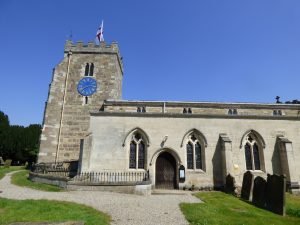
This church was built in three stages – the chancel c1395, the tower c1410 and the nave 1450-1550. It is a grade 1 church and has magnificent medieval stonework, a nave full of 17th century oak pews and some beautiful Victorian woodwork and stained glass and a lot of well weathered some potentially grotesque carvings.
St Andrew’s Church, Aldborough

An image illustrating an article about St Andrews Church Aldborough on thealicesyndrome.com

Partially destroyed by Scots raiders in 1318 this church sits very near to Isurium Brigantium and may date back to much earlier times…

St Michael’s Church, Kirklington

St Michael's Church, Kirklington, North Yorkshire

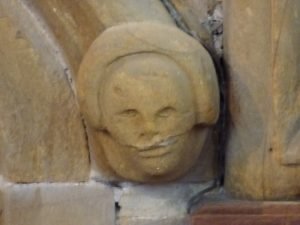
St Michael’s Church at Kirklington stems from prior to the Norman Period and has ghosts of an even earlier period in the form of the various carved heads found inside and outside the church.

Dundon Hill Fort

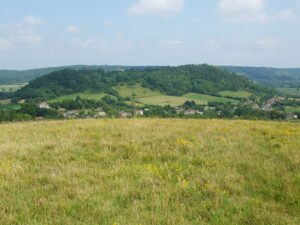
Dundon Hill from Lollover Hill

Dundon Hill rises as a freestanding limestone knoll above King’s Sedgemoor near Compton Dundon in central Somerset. A single earth-and-stone rampart, now anywhere between half a metre and a couple of metres high, encloses roughly five hectares on the summit.

Carl Wark Hill Fort

This is a hill fort of unproven origin, best thought to be Iron or Dark age in date. Bronze Age artifacts are also close by and show a long general occupation of the area. The primary purpose for this visit was to investigate the possibility that it was used by the Brigantes during the period of Cartimandua and, if so, to try to assess its role between 43 and 70 AD.

Classification of Vitrified Forts

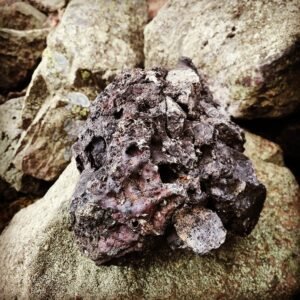
Very vitrified. Possibly part of the pictish fort that was here.

Archaeologists have suggested ways to organise the very varied “vitrified forts” into formal classes – especially schemes that distinguish forts by how much and what kind of vitrification their ramparts show. Below is a digest of the main classification ideas that have been proposed in the literature and how researchers actually use them in field reports and laboratory work.

The Vitrified Forts of the British Isles and Europe

Tap O Noth LiDAR 1m - Thanks to the National Library of Scotland

This page is the “collection centre” for our research into vitrified forts, covering the area largely known as the British Isles.

Contact Us
close slider