At its core the “hero” is the figure who steps out of ordinary society, confronts chaos or a monster, and returns (or dies) having secured order for the group. In Jungian and comparative-myth terms it sits in the “warrior-champion” slot of the collective story-board; evolutionists would say it crystallises the survival value of decisive coalition leadership in small bands.
Period: Early Medieval
Black Dike – Coverdale
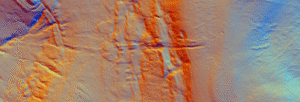
Black Dike is the diminutive counterpart to the great Tor Dike, rising from its western arm and climbing to the watershed between Great and Little Whernside. Beginning at roughly SD 988 756—where Tor Dike cleaves the limestone scarp—the Black Dike pursues a steep, sinuous course uphill for nearly 0.6 km, finally spilling onto the ridge crest at about 675 m above sea level
Jun 11
Guide: Ritual/Ceremonial Mounds
These are raised platforms created first and foremost for cult, procession, assembly or conversion—not for fortification or routine boundary-making. They tend to be much more significant and monumental than other mounds and raised platforms. Some are the largest structures known of their type. In Britain, possibly the best known example is Silbury Hill in Wiltshire.
Moulton Henge
Archaeologists now recognise a true Neolithic henge lying immediately south-west of Moulton village, roughly midway between the Swale and Dere Street. The monument is almost 200 m across, with a low earthen bank encircling an inner ditch and a central platform about 110 m wide; the ditch lies inside the bank—the classic “Class II” henge arrangement.
Castle Hill, Almondbury
Castle Hill’s imposing silhouette hides a great prehistoric fort, Norman castle and Victorian tower. Thanks to Varley’s trenches and the 1995 RCHME survey we have a solid structural framework, yet key chronological pins, remain to be driven. It is therefore both a celebrated landmark for Huddersfield and a live research asset for Iron-Age, and medieval research.
Sep 27
Mystery of Vitrified Forts
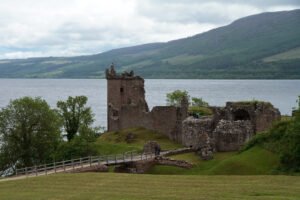
It was during a trip to.Scotland, in the Summer of 1997, that I first heard of vitrified hillforts. It was near Urqhart Castle, south of Inverness. As ancient monuments close early in that country, I could only see from a distance that impressive ruined fortress overlooking the west bank of Loch Ness.