Location: North Derbyshire

Camp Green (Danes Camp), Hathersage

Danes Camp Hathersage

Camp Green (often called “Danes Camp”) crowns a limestone-capped knoll immediately north-east of St Michael’s Church in Hathersage (OS grid SK 234 819). Perched above the Hope Valley, it commands wide views down the River Derwent corridor and sits at the transition between the Millstone Grit plateaux to the north and the lower limestone and sandstone vale to the south

Moulton Henge

Moulton Henge - 1m Lidar

Archaeologists now recognise a true Neolithic henge lying immediately south-west of Moulton village, roughly midway between the Swale and Dere Street. The monument is almost 200 m across, with a low earthen bank encircling an inner ditch and a central platform about 110 m wide; the ditch lies inside the bank—the classic “Class II” henge arrangement.

Mam Tor Hill Fort, Castleton, Derbyshire

Despite is unusually high position, this fort contains traces of a number of huts, and on investigation these have yielded plentiful pottery, as well as charcoal giving a surprisingly early radio carbon date

Farley Moor Stone Circle, Derbyshire

Farley Moor Standing Stone, now part of Farley Moor Stone Circle, thanks to Time Team. Image taken from their video, below.

Geophysics and three hand-excavated trenches uncovered ten further uprights, in addition to the known standing stone at Farley Moor Woods, lying just below the leaf-litter, defining a ring c. 18 m in diameter around the visible stone. A low stone-built platform or “kerb cairn” occupies the circle’s south-eastern arc; charcoal lenses and a smashed Collared-Urn sherd in its make-up gave an early Bronze-Age radiocarbon estimate of c. 1700 BCE (3,700 cal BP).

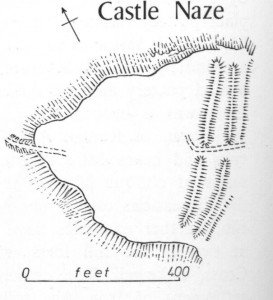
Castle Naze Hill Fort

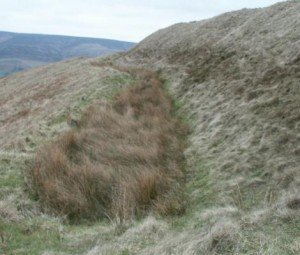
This is a promontory fort of probable Iron Age date. It uses the natural cliffs of the hill that it stands to protect its northern and western sides. It is triangular in form, and to protect its south-eastern face, a very impressive double rampart of possibly later Iron Age construction has been thrown up.

Brigantia

Carton Castle - Google

The name Brigantia represents three separate concepts: a goddess, a people, and a tribal federation. By the Roman period, the name represented a tribal federation compromising all of what would become the Roman province of Britannia Secunda, except for the Parisi territory, east of the River Derwent.

Carl Wark Hill Fort

This is a hill fort of unproven origin, best thought to be Iron or Dark age in date. Bronze Age artifacts are also close by and show a long general occupation of the area. The primary purpose for this visit was to investigate the possibility that it was used by the Brigantes during the period of Cartimandua and, if so, to try to assess its role between 43 and 70 AD.

North Derbyshire

The transformation of North Derbyshire from 50AD to the present is a fascinating journey through time, reflecting broader historical shifts in Britain. Initially, during the Roman conquest of Britain, Derbyshire fell under the influence of the Roman Empire, becoming part of the province of Flavia Cæsariensis.

Contact Us
close slider