
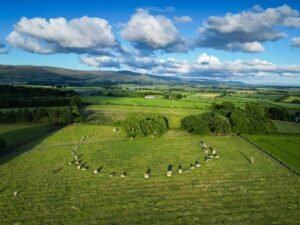
Long Meg and her Daughters is a remarkable Neolithic monument located near Penrith in Cumbria, England.
Period: Late Neolithic Period
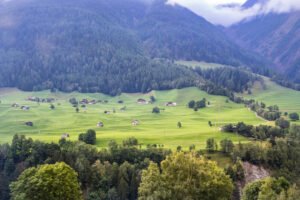
Anciens Arsenaux Neolithic Settlement, Sion – Switzerland
- Filed under Animal Remains, Augustus Caesar, Civil Structure, Dragons, Early Neolithic, Enclosure, Europe, Field Systems, Hamlet, Hoof marks, Julius Caesar, Myth and Legend, Neolithic, New Sites, Planig‑Friedberg ware, Polished Stone Adze, Pottery, Quern Stones, Roman army, Roman baths, Roman City, Roman Culture, Roman Villa, Switzerland, The Devil, Vasi a Bocca Quadrata ware, Witches
Sion lies midway along the upper Rhône Valley, an east‑west trench gouged by repeated Pleistocene glaciers and now flanked by the Pennine and Bernese Alps. The settlement area sits on the alluvial fan of the Sionne torrent, a cone of well‑sorted sands and gravels that projects onto the wider Rhône flood‑plain.
- adze, Ard, Bronze Age, Causewayed enclusure, Chambered tombs, Cross Cut ploughing, cross ploughing, Early Neolithic, Europe’s oldest plough furrows, Flintbek LA, Guldager-Nygård, Iron Age, Les Arsenaux, Long Barrow, Mesolithic, Neolithic, Oppida, Oppidum, palaeolithic, Planig‑Friedberg ware culture, Pleistocene glaciers, ploughing, polished adze, Pottery, Quern, Rhône Valley, Roman, Seduni, Sedunum, South Street Long Barrow, Stone Tools, Torsted-Langagergård, Vasi a Bocca Quadrata culture, Vasi a Bocca Quadrata ware, VBQ
- Leave comment
Wellhill, Dunning Early Neolithic Farm – Perthshire
- Filed under Agriculture, Early Neolithic, Field Systems, Mesolithic, Neolithic, New Sites, Norman, Pottery, Scotland
The village of Dunning in Perthshire, Scotland, has been revealed through excavation as having traces of human activity dating back 10,000 years. This included evidence of what could be the earliest farming activity recorded in Scotland so far, and also remains of hunter-gathering activity dating back to the Mesolithic period.
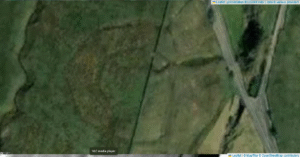
Dryburn Henge, Cumbria
- Filed under Brigantia, Brigantia England, Bronze Age, Class I, Enclosure, Henge, Late Bronze Age, Neolithic, Ritual Landscape
Dryburn Henge lies on Alston Moor in Cumbria, within the North Pennines Area of Outstanding Natural Beauty. It occupies a strategic nodal point on the high moor, roughly at NY 760 430, where routes across the Pennine watershed converge. The surrounding terrain is underlain by Carboniferous Great Scar Limestone and interbedded Yoredale shales, with scattered fluvioglacial gravels in valley bottoms.
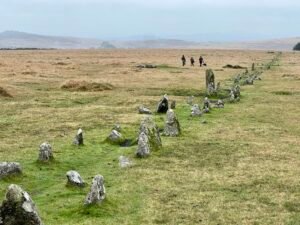
What might Stonehenge Mean? Dartmoor and Carnac add to the Picture
- Filed under Barrow, Bell Barrow, Britain, Bronze Age, France, Funerary Urns, Hair Braid - Ring, Landscape feature, Megalithic, Mining, Neolithic, News, Radiocarbon Dating, Smelting, Stone alignment, Stone Circle, Stone Row, Wales
Stonehenge has always been enigmatic, due to its use of those definitive morticed trilithons, all of which where squared of, more like the structures of the Maltese temples and other stone structures closer to Africa, as opposed to those of the rest of Britain and most of the wider North-west European ritual landscape.
- amesbury, Anglesey, archer, boltby, Boltby Scar, britain, Bronze Age, Carnac, Dartmoor, France, Gold Tresses, Great Orme, Hill Fort, Kirkhaugh, Llanymynech, Nabta Playa, nenthead, Neolithic, North Yorkshire, Parys Mountain, Powys, Rouslton Moor, Shropshire, Stonehenge, Tabular Hills, wales, Yorkshire Moors
- 4 comments
Articles
- Bronze Age
- Iron Age
- Roman
- Dark Ages
- Early Christian
- Viking
- Saxon
- Medieval
- Vitrified Fort
- Archaeology Guide
- Guide – Introduction to Critical Thinking in Archaeological Research
- Guide – Challenging Assumptions with Free Thinking
- Guide – Congruence in Archaeological Interpretation: Holistic Analysis
- Guide – Critical Thinking: Lack of Evidence Does Not Mean Evidence of Lack
- Guide – Critical Thinking: The Simple Assumption
- Guide – Applying critical thinking to historic and archaeological research
- Guide – Empathic Archaeology Introduction
- Guide – Landscape Archaeology Introduction
- Guide – What is Landscape Archaeology?
- Guide – Introduction to Glacial Archaeology
- Guide – The Flora and Fauna of Prehistoric Britain
- Guide – Landscape Archaeology: Post-Ice Age Landscape of Thornborough
- Guide – Archaeological Periods in Western Europe
- Guide – Visible Remains
- Guide – Hidden Remains
- Guide – Getting Started
- Guide – Landscape Features
- Guide – Agricultural practices through time
- Guide – Introduction to Glacial Archaeology
- Guide: In Depth – Church Doors and Windows
- Guide – Mining
- Guide – Archaeological Terms
- Guide – Glossary
- Latin Translation – Choosing the meaning of AUG
- Reports
- An introduction to Brigantian Druidry
- Brigantia during the Dark Ages
- Celtic Heads
- Finding Bardon – An Arthurian Quest
- Early Christian syncretism and how the old ones hid amongst the new religion
- Rome: The Emperors Claim to Divinity
- Syncretism through the ages
- The Border Reivers
- The Gallus Frontier – Brigantia against the Romans
- The growth of Christianity 50AD – 1100AD
- The Kingdom of Venutius
- The use of the word Lady in relation to water related structures
- The walled gardens of Brigantia
- Yorkshire’s “Sacred Vale” – The Dawn of Brigantia
- Brigantia Espania
- Iberian Peninsular
- Galicia
- Biefing – The Myth of Breogán and the Tower of Heracles
- Briefing – Galicia’s Political History and Separatist Sentiment
- Briefing – Geography and Geology of Galicia
- Briefing – Design of Galician Hillforts
- Briefing – Roman Interaction with Galicia and the Iberian Peninsula
- Church of Santa María de Cambre, Cambre near A Coruña
Categories
- Agriculture (6)
- Field Systems (1)
- ploughing (2)
- Angle (2)
- Archaeological Periods (312)
- Anglo-saxon (6)
- Bronze Age (52)
- Late Bronze Age (1)
- Dark Ages (24)
- Dark Ages Brigantia (9)
- Early Christian (37)
- Early Medieval (8)
- Georgian (9)
- Gothic (3)
- Ice Age (1)
- Iron Age (133)
- Late Iron Age (5)
- Jacobite (7)
- Medieval (61)
- Medieval Brigantia (9)
- Mesolithic (11)
- Neolithic (45)
- Early Neolithic (5)
- Norman (40)
- Palaeolithic (6)
- Roman (94)
- Saxon (9)
- Stuart (6)
- Suspect (1)
- Tudor (10)
- Undated (7)
- Viking (4)
- Archaeology (94)
- Archaeobotanical (1)
- Empathic Archaeology (11)
- Free Thinking (7)
- Battle (1)
- Brigantia (147)
- Brigantia England (134)
- Brigantia Espania (11)
- Civil Structure (6)
- Defensive Structures (45)
- Castle (5)
- Defensive Dike (2)
- Defensive Walls (1)
- Fort (20)
- Fortified Barn (1)
- Marching Camp (5)
- Motte and Bailey (6)
- Ring Work (1)
- Class A (1)
- Dialects (1)
- Earthworks (51)
- Dike (8)
- Field Systems (26)
- Enclosure (12)
- Enclosure Acts (1)
- Europe (51)
- Festivals (2)
- Finds (42)
- Altar (10)
- Amphora (1)
- Animal Remains (4)
- Auroch (1)
- Hoof marks (1)
- Antler Pick (2)
- Arrowhead (1)
- Leaf-shaped (1)
- Axe (1)
- Bone Comb (1)
- Celtic Head (8)
- Celtic Head (2)
- Clock (1)
- Curse Tablet (1)
- Flint Scatters (4)
- Gaming Pieces (1)
- Hair Braid – Ring (4)
- Human Remains (2)
- Adult (1)
- Couched Burial (1)
- Juvinile (1)
- Mace Head (1)
- S-curved (1)
- Mosaic (1)
- Polished Stone Adze (1)
- Pottery (8)
- Funerary Urns (2)
- Grooved ware (1)
- Peterborough ware (1)
- Mortlake ware (1)
- Planig‑Friedberg ware (1)
- Samian ware (2)
- Vasi a Bocca Quadrata ware (1)
- Quern Stones (1)
- Statue (1)
- Geography (16)
- Maps (7)
- Geology (13)
- Anthracite – Coal (2)
- Geomorphology (2)
- Gods (9)
- Guide (72)
- Critical Thinking (8)
- Socratic Thought (1)
- Glossary (1)
- Hidden Remains (8)
- Geophysics (5)
- LiDAR (1)
- Radiocarbon Dating (1)
- Remote Sensing and Analysis (1)
- Regional Surveys (13)
- Research Tools (4)
- Visible Remains (12)
- Air Mapping (2)
- Air Photography (2)
- Fieldwalking (2)
- Lithics (1)
- Photography (6)
- Critical Thinking (8)
- Henge (18)
- Hill Fort (61)
- Castro Hillfort (3)
- Contour/Plateau Fort (1)
- Multivallete Hillfort (1)
- Oppidum (1)
- Oppidum (1)
- Promontory fort (4)
- Slavic Gord (1)
- Univallet Hillfort (4)
- Vitrified Fort (27)
- Historic Buildings (20)
- Amphitheatre (1)
- Barn (2)
- Beacon (1)
- Broch (1)
- Coaching Inn/Hostelry (1)
- Folly (4)
- Hall (2)
- Hospital (1)
- House (1)
- Tower (7)
- Walled Garden (1)
- Industrial Heritage (9)
- Chimney (1)
- Mining (9)
- Spoil Heap (1)
- Smelting (2)
- Iron-Age (1)
- Landscape Archaeology (38)
- Glacial Archaeology (2)
- Landscape Legislation (1)
- Mining Landscape (1)
- Ritual Landscape (6)
- Landscape feature (49)
- Barrow (18)
- Bell Barrow (2)
- Bowl Barrow (1)
- Cairn (2)
- Disc Barrow (1)
- Long Barrow (5)
- Ring Barrow (1)
- Ring Cairn (1)
- Round Barrow (1)
- Square Barrow (1)
- Steppe Kurgan (1)
- Boundary Marker (2)
- Burial Mound (9)
- Ceremonial Mount (1)
- Cursus (2)
- Hill Figure (5)
- Linear Earthworks (2)
- Mound (6)
- Passage Tomb (1)
- Ring Cairn (2)
- Snake Mound (1)
- Terraces (3)
- Barrow (18)
- Leaders (33)
- Agricola (2)
- Arthur (1)
- Augustus Caesar (2)
- Breogans (3)
- Caratacus (1)
- Cnut (1)
- Julius Caesar (1)
- Petilius Cerialis (1)
- Liminal Spaces (1)
- Market (1)
- Megalithic (10)
- Rock Art (3)
- Stone alignment (1)
- Stone Circle (7)
- stone circles (1)
- Stone Row (2)
- Myth and Legend (5)
- New Sites (23)
- Publications (21)
- Biographies (2)
- Henge Capital of Britain (10)
- News (4)
- Stories of Brigantia (4)
- Walking Guides (1)
- Rabbit Warren (1)
- Religious Structures (31)
- Abbey (3)
- Church (24)
- Crosses (1)
- Memorial Planting (1)
- Priory (2)
- Religious Orders (3)
- Ritual walkway/pilrimage path (1)
- Reports (148)
- Roman Culture (11)
- Roman army (8)
- Roman baths (1)
- Roman City (1)
- Roman Gods (1)
- Mercury (1)
- Roman navy (1)
- Roman pottery (3)
- Samian ware (2)
- Roman Road (1)
- Roman Roads (2)
- Roman Villa (2)
- The Celtic World (35)
- Celtic Gods (1)
- Lugh (1)
- Celtic Industry (1)
- Celtic Life (9)
- Celtic Trade (1)
- Celtic Tribes (27)
- Celtic Gods (1)
- Trade (4)
- Minting (3)
- Coins (1)
- Spoil Heaps (2)
- Minting (3)
- Translation (7)
- Inscription (4)
- Latin (5)
- Uncategorized (24)
- Water Works (13)
Research Links
Heritage Gateway


