Venutius

Author's posts

Guide – Archaeological Periods in Western Europe

A landscape showing the evolution of human history

Understanding the archaeological periods across Western Europe is essential for exploring the evolution of human societies from prehistory to the beginnings of written history. These periods are generally defined by shifts in technology, social organization, and the environment, and they often vary slightly from region to region.

Guide – Landscape Archaeology: Post-Ice Age Landscape of Thornborough

The landscape of Thornborough before the arrival of humans was shaped by the end of the last Ice Age, approximately 10,000 years ago. As the glaciers receded, the land began to warm, leading to the rebirth of plant and animal life. The area would have been covered by a mosaic of vegetation that slowly replaced the tundra-like conditions left behind by the retreating ice sheets.

Guide – Empathic Archaeology: The Ancestral Honour Thought Exercise

A father and son working together in a field, around 20,000 BC.

Celtic Heads Celtic Head from Witham, 2nd c B.C. (British Museum) “Celtic” carved heads are found throughout the Read more Timeline 60BC – 138AD This timeline is focussed on the British Celtic culture and those cultures which had influence on the British Celts. It Read more Heads at St Michael, Kirklington An analysis of head …

Continue reading

Briefing – Galicia’s Political History and Separatist Sentiment

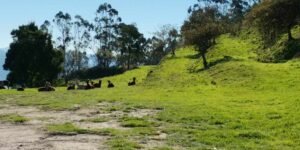
Castro de Santa Trega Terracing

Galicia’s Celtic origins have long played a significant role in shaping the region’s cultural and political identity. Historically, Galicia was inhabited by Celtic tribes, and this heritage is still celebrated today in Galician culture, language, and folklore.

Iberian Peninsular

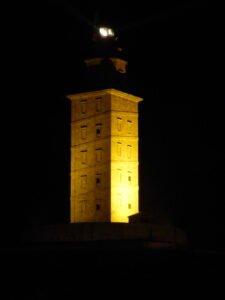
Tower of Hercules

Spain, located on the Iberian Peninsula in the southwestern corner of Europe, is a country of rich contrasts—mountains, beaches, valleys, and vast plains. It shares borders with France and Portugal and is surrounded by the Mediterranean Sea to the east and south, and the Atlantic Ocean to the north and west.

Guide – Critical Thinking: The Simple Assumption

A car in a river and the driver saying it is a car park

We often take for granted the advancements we see in the world today. Many inventions, breakthroughs, and societal changes feel almost mundane to us, simply because we are accustomed to living in an era where they are well-established.

Guide – Landscape Features: The Impact of Drainage Ditches

The flora of a drainage ditch

Celtic Heads Celtic Head from Witham, 2nd c B.C. (British Museum) “Celtic” carved heads are found throughout the Read more Timeline 60BC – 138AD This timeline is focussed on the British Celtic culture and those cultures which had influence on the British Celts. It Read more Heads at St Michael, Kirklington An analysis of head …

Continue reading

Guide – Landscape Features

Field systems and earthworks at Grassington

Guide – Archaeological Terms Glossary of Archaeological Terms Acheulian Later stages of Lower Palaeolithic culture defined by their particularly fine hand axes. Aeolian Deposited Read more Guide – Man’s impact on the landscape Man’s impact on the landscape For thousands of years men and women have fashioned the landscape according to their needs. Read more …

Continue reading

Guide – Landscape Features: Drainage Gullies

A typical modern looking field drain

Guide – Archaeological Terms Glossary of Archaeological Terms Acheulian Later stages of Lower Palaeolithic culture defined by their particularly fine hand axes. Aeolian Deposited Read more Historic Publications Historic Publications Tacitus Tacitus grew up during a the reign of Nero, and may have been a teenager when Nero Read more Southern Roman Forts Map   …

Continue reading

Guide – The Flora and Fauna of Prehistoric Britain

Before we delve into the appearance of humans on the landscape, it’s important to understand the flora and fauna that dominated the earth, and particularly Britain, during the Pleistocene and Holocene epochs. The development of ecosystems in prehistoric times was heavily influenced by the global climatic shifts of the Ice Ages.

Contact Us
close slider