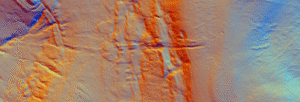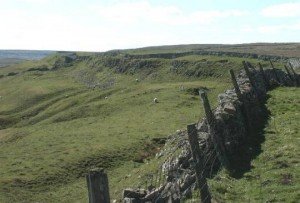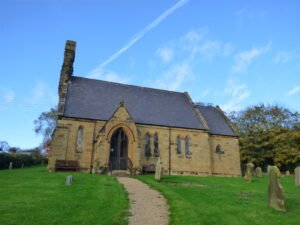
Boltby is a very important ancient site IMO. A gold “hair braid”, was found there, linking it to the Amesbury Archer, buried with two similar hair braids. This also provides a link to the founding of Stonehenge, which helps set a potential scene for a possible “zeitgeist”, of the day.
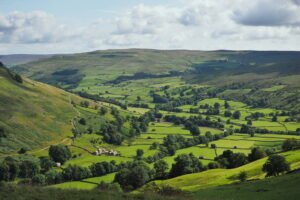
Location: North Yorkshire
Nov 23
The Story of Boltby Scar
- Filed under Brigantes, Brigantia, Brigantia England, Britain, Bronze Age, Celtic Tribes, Defensive Dike, Defensive Walls, Dike, Europe, Fort, Hair Braid - Ring, Hill Fort, Iron Age, Landscape Archaeology, Linear Earthworks, Mining Landscape, Promontory fort, Stories of Brigantia
Swaledale
- Filed under Brigantia, Brigantia England, Britain, Cairn, Europe, Flint Scatters, Geology, Geomorphology, Hill Fort, Iron-Age, Megalithic, New Sites, Promontory fort, Ring Cairn, Rock Art, Univallet Hillfort
Swaledale occupies the long, sinuous valley carved by the River Swale on its 45-kilometre descent from Nine Standards Rigg (662 m) on the Pennine watershed to Richmond in lower Teesdale. The dale narrows between rough gritstone scarps near Keld, broadens to a patchwork of hay-meadows around Muker and Gunnerside, then opens into a tree-fringed flood-plain west of Reeth before the river cuts through the Carboniferous escarpment to meet the Vale of Mowbray.
- Arkengarthdale, Bainbridge, Barns, Benedictine, Blakethwaite Smelt Mine, Brigante, Brigantes, Brigantia, Bunton, Buttertubs, cairn, Cateractonium, Catterick, Cistercian, Corpse-way, Crackpot, Craclpot, Cup-mark, Deer Park Wood, Downholme, Dyke, Dykes, East Gill Force, Ellerton Abbey, Enclosure Acts, field-barns, Fort, Fountains Abbey, Franciscan, Fremington Edge, Fremmington, Friary, Gangs Flats, Gill, Great Pinseat, Great Scar, Great Scar Limestone, Great Shunner, Greyfriars, Grinton, Grinton Moor, Gunnerside, Gunnerside Gill, Harkerside Moor, Hay-meadow, hay-meadows, Healaugh, Herkersdie Moor, Hill Fort, Hind Rake, How Hill, Humber-Flanders export route, Hunter Gatherer, Hush, Hushes, Iron Age, Ivelet Bridge, Keld, Keldside, Kisdon Force, Kisdon Hill, Lead Mining, Lead-veins, Lower Teasdale, Lower Teesdale, Maiden Castle, market, Marrick Priory, Marske, Marske Deer Park, Marske Hall, Meadow, Mine, Mining, monk, Monks, Muker, Norse, North Yorkshire, nun, Nuns, Old Gang, Packhorse Bridge, Parliamentary Walls, Penine Watershed, Pennine watershed, Reeth, Richmond, Rievaulx Abbey, Ring Cairn, River Swale, Rock, rock-art, Roman, Sheep, Shunner Fell, Skeb Skeugh, Smelt, smelting, St Martin's Priory, Stainmore, Standards Rigg, stone, Swale, Swaledale, Tan Hill, Tan Hill Pub, terraces, Thwaite, Trajanic Lead Pig, vale of Mowbray, Walburn, White Rigg, Wool, Yorkshire Dales
- Leave comment
Head One – St Michaels Church, Kirklington
- Filed under Celtic Head, Celtic Head, Church, Gothic
This head is one of thirteen “Celtic”, or archaic heads that are located within the interior of the church. Twelve of those heads, including this one, are located in four rows of three, which run down either side of the churches arched columns. The thirteenth head is located in the bell tower.
Cana Barn Henge
- Filed under Brigantia, Brigantia England, Britain, Class IIa, Europe, Henge, Liminal Spaces, Neolithic, New Sites
The stats for this Neolithic monument are astounding: 200m across, once a great circle of earthen banks and deep ditches. Today, almost lost: 5,000 years of plough and neglect have flattened the banks and filled the ditches, and Cana Henge is now nothing but a smoothly undulating grassy field on the moor overlooking Ripon.
Oval Barrow east of Ulshaw Bridge
- Filed under Brigantia, Brigantia England, Burial Mound, Landscape feature, Long Barrow
This unexcavated and undated barrow matches many of other Late Neolithic / Early Bronze-Age round barrows (c. 2400–1500 BC) dotted along the flanks of the Yorkshire Dales.
Cleave Dyke Defensive System
- Filed under Brigantia, Brigantia England, Britain, Defensive Structures, Dike, Iron Age, Landscape feature
The Cleave dyke system is several Dykes which combine to create a boundary of between 9 and 18 kilometres running north south to the west of Thirsk.
Black Dike – Coverdale
- Filed under Boundary Marker, Brigantia, Brigantia England, Dark Ages, Dark Ages Brigantia, Dike, Iron Age, Landscape feature, New Sites
Black Dike is the diminutive counterpart to the great Tor Dike, rising from its western arm and climbing to the watershed between Great and Little Whernside. Beginning at roughly SD 988 756—where Tor Dike cleaves the limestone scarp—the Black Dike pursues a steep, sinuous course uphill for nearly 0.6 km, finally spilling onto the ridge crest at about 675 m above sea level
Tor Dyke
Tor Dyke appears to have been attributed to Venutius which dates it of the period AD 52 – 70. The presence of a legionary size marching camp a few miles to the southwest at Malham certainly indicates an active role in the Roman advance of AD 70. However, given the lack of published research so far a clear picture has yet to emerge.
Jun 27
Prehistoric mounds, cairns and boundary earthworks in Coverdale
- Filed under Archaeology, Barrow, Boundary Marker, Brigantia, Brigantia England, Bronze Age, Burial Mound, Dark Ages, Dark Ages Brigantia, Early Christian, Early Medieval, Guide, Iron Age, Landscape Archaeology, Landscape feature, Motte and Bailey, Mound, New Sites, Roman, Terraces, Visible Remains
A gazetteer of probable prehistoric mounds, cairns and boundary earthworks in Coverdale. It is not complete and is still being researched.
Bishopdale
- Filed under Brigantia, Britain, Landscape Archaeology
Bishopdale lies within the northern limb of the Askrigg Block, its underlying bedrock dominated by Carboniferous limestones with intermittent shales and sandstones of the Yoredale Series. The Great Scar Limestone, a thick, massive unit formed around 330 million years ago in a shallow tropical sea, underpins the dale’s steeper scarps and cliff lines, while the thinner-bedded limestones and intervening mudstones of the Yoredale Group create the characteristic terraced flanks on which many of Bishopdale’s field systems are laid out
Articles
- Bronze Age
- Iron Age
- Roman
- Dark Ages
- Early Christian
- Viking
- Saxon
- Medieval
- Vitrified Fort
- Archaeology Guide
- Guide – Introduction to Critical Thinking in Archaeological Research
- Guide – Challenging Assumptions with Free Thinking
- Guide – Congruence in Archaeological Interpretation: Holistic Analysis
- Guide – Critical Thinking: Lack of Evidence Does Not Mean Evidence of Lack
- Guide – Critical Thinking: The Simple Assumption
- Guide – Applying critical thinking to historic and archaeological research
- Guide – Empathic Archaeology Introduction
- Guide – Landscape Archaeology Introduction
- Guide – What is Landscape Archaeology?
- Guide – Introduction to Glacial Archaeology
- Guide – The Flora and Fauna of Prehistoric Britain
- Guide – Landscape Archaeology: Post-Ice Age Landscape of Thornborough
- Guide – Archaeological Periods in Western Europe
- Guide – Visible Remains
- Guide – Hidden Remains
- Guide – Getting Started
- Guide – Landscape Features
- Guide – Agricultural practices through time
- Guide – Introduction to Glacial Archaeology
- Guide: In Depth – Church Doors and Windows
- Guide – Mining
- Guide – Archaeological Terms
- Guide – Glossary
- Latin Translation – Choosing the meaning of AUG
- Reports
- An introduction to Brigantian Druidry
- Brigantia during the Dark Ages
- Celtic Heads
- Finding Bardon – An Arthurian Quest
- Early Christian syncretism and how the old ones hid amongst the new religion
- Rome: The Emperors Claim to Divinity
- Syncretism through the ages
- The Border Reivers
- The Gallus Frontier – Brigantia against the Romans
- The growth of Christianity 50AD – 1100AD
- The Kingdom of Venutius
- The use of the word Lady in relation to water related structures
- The walled gardens of Brigantia
- Yorkshire’s “Sacred Vale” – The Dawn of Brigantia
- Brigantia Espania
- Iberian Peninsular
- Galicia
- Biefing – The Myth of Breogán and the Tower of Heracles
- Briefing – Galicia’s Political History and Separatist Sentiment
- Briefing – Geography and Geology of Galicia
- Briefing – Design of Galician Hillforts
- Briefing – Roman Interaction with Galicia and the Iberian Peninsula
- Church of Santa María de Cambre, Cambre near A Coruña
Categories
- Agriculture (6)
- Field Systems (1)
- ploughing (2)
- Angle (2)
- Archaeological Periods (312)
- Anglo-saxon (6)
- Bronze Age (52)
- Late Bronze Age (1)
- Dark Ages (24)
- Dark Ages Brigantia (9)
- Early Christian (37)
- Early Medieval (8)
- Georgian (9)
- Gothic (3)
- Ice Age (1)
- Iron Age (133)
- Late Iron Age (5)
- Jacobite (7)
- Medieval (61)
- Medieval Brigantia (9)
- Mesolithic (11)
- Neolithic (45)
- Early Neolithic (5)
- Norman (40)
- Palaeolithic (6)
- Roman (94)
- Saxon (9)
- Stuart (6)
- Suspect (1)
- Tudor (10)
- Undated (7)
- Viking (4)
- Archaeology (93)
- Archaeobotanical (1)
- Empathic Archaeology (11)
- Free Thinking (7)
- Battle (1)
- Brigantia (147)
- Brigantia England (134)
- Brigantia Espania (11)
- Civil Structure (6)
- Defensive Structures (45)
- Castle (5)
- Defensive Dike (2)
- Defensive Walls (1)
- Fort (20)
- Fortified Barn (1)
- Marching Camp (5)
- Motte and Bailey (6)
- Ring Work (1)
- Class A (1)
- Dialects (1)
- Earthworks (51)
- Dike (8)
- Field Systems (26)
- Enclosure (12)
- Enclosure Acts (1)
- Europe (51)
- Festivals (2)
- Finds (42)
- Altar (10)
- Amphora (1)
- Animal Remains (4)
- Auroch (1)
- Hoof marks (1)
- Antler Pick (2)
- Arrowhead (1)
- Leaf-shaped (1)
- Axe (1)
- Bone Comb (1)
- Celtic Head (8)
- Celtic Head (2)
- Clock (1)
- Curse Tablet (1)
- Flint Scatters (4)
- Gaming Pieces (1)
- Hair Braid – Ring (4)
- Human Remains (2)
- Adult (1)
- Couched Burial (1)
- Juvinile (1)
- Mace Head (1)
- S-curved (1)
- Mosaic (1)
- Polished Stone Adze (1)
- Pottery (8)
- Funerary Urns (2)
- Grooved ware (1)
- Peterborough ware (1)
- Mortlake ware (1)
- Planig‑Friedberg ware (1)
- Samian ware (2)
- Vasi a Bocca Quadrata ware (1)
- Quern Stones (1)
- Statue (1)
- Geography (16)
- Maps (7)
- Geology (13)
- Anthracite – Coal (2)
- Geomorphology (2)
- Gods (9)
- Guide (72)
- Critical Thinking (8)
- Socratic Thought (1)
- Glossary (1)
- Hidden Remains (8)
- Geophysics (5)
- LiDAR (1)
- Radiocarbon Dating (1)
- Remote Sensing and Analysis (1)
- Regional Surveys (13)
- Research Tools (4)
- Visible Remains (12)
- Air Mapping (2)
- Air Photography (2)
- Fieldwalking (2)
- Lithics (1)
- Photography (6)
- Critical Thinking (8)
- Henge (18)
- Hill Fort (61)
- Castro Hillfort (3)
- Contour/Plateau Fort (1)
- Multivallete Hillfort (1)
- Oppidum (1)
- Oppidum (1)
- Promontory fort (4)
- Slavic Gord (1)
- Univallet Hillfort (4)
- Vitrified Fort (27)
- Historic Buildings (20)
- Amphitheatre (1)
- Barn (2)
- Beacon (1)
- Broch (1)
- Coaching Inn/Hostelry (1)
- Folly (4)
- Hall (2)
- Hospital (1)
- House (1)
- Tower (7)
- Walled Garden (1)
- Industrial Heritage (9)
- Chimney (1)
- Mining (9)
- Spoil Heap (1)
- Smelting (2)
- Iron-Age (1)
- Landscape Archaeology (38)
- Glacial Archaeology (2)
- Landscape Legislation (1)
- Mining Landscape (1)
- Ritual Landscape (6)
- Landscape feature (49)
- Barrow (18)
- Bell Barrow (2)
- Bowl Barrow (1)
- Cairn (2)
- Disc Barrow (1)
- Long Barrow (5)
- Ring Barrow (1)
- Ring Cairn (1)
- Round Barrow (1)
- Square Barrow (1)
- Steppe Kurgan (1)
- Boundary Marker (2)
- Burial Mound (9)
- Ceremonial Mount (1)
- Cursus (2)
- Hill Figure (5)
- Linear Earthworks (2)
- Mound (6)
- Passage Tomb (1)
- Ring Cairn (2)
- Snake Mound (1)
- Terraces (3)
- Barrow (18)
- Leaders (33)
- Agricola (2)
- Arthur (1)
- Augustus Caesar (2)
- Breogans (3)
- Caratacus (1)
- Cnut (1)
- Julius Caesar (1)
- Petilius Cerialis (1)
- Liminal Spaces (1)
- Market (1)
- Megalithic (10)
- Rock Art (3)
- Stone alignment (1)
- Stone Circle (7)
- stone circles (1)
- Stone Row (2)
- Myth and Legend (5)
- New Sites (23)
- Publications (21)
- Biographies (2)
- Henge Capital of Britain (10)
- News (4)
- Stories of Brigantia (4)
- Walking Guides (1)
- Rabbit Warren (1)
- Religious Structures (31)
- Abbey (3)
- Church (24)
- Crosses (1)
- Memorial Planting (1)
- Priory (2)
- Religious Orders (3)
- Ritual walkway/pilrimage path (1)
- Reports (148)
- Roman Culture (11)
- Roman army (8)
- Roman baths (1)
- Roman City (1)
- Roman Gods (1)
- Mercury (1)
- Roman navy (1)
- Roman pottery (3)
- Samian ware (2)
- Roman Road (1)
- Roman Roads (2)
- Roman Villa (2)
- The Celtic World (35)
- Celtic Gods (1)
- Lugh (1)
- Celtic Industry (1)
- Celtic Life (9)
- Celtic Trade (1)
- Celtic Tribes (27)
- Celtic Gods (1)
- Trade (4)
- Minting (3)
- Coins (1)
- Spoil Heaps (2)
- Minting (3)
- Translation (7)
- Inscription (4)
- Latin (5)
- Uncategorized (24)
- Water Works (13)
Research Links
Heritage Gateway
Announcing: The Brigantian News!
- Roman Road to the West uncovered under Manchester Street 16 July 2025
- What might Stonehenge Mean? Dartmoor and Carnac add to the Picture 3 July 2025
- Megalithic Stone Monuments in France May Be Europe’s Oldest 1 July 2025
- Drumanagh Promontory Fort – First Ever Intact Roman Pot Found in Ireland 5 June 2025
Portable Antiquities News
A silver Medieval half groat of Edward IV, first reign, light issue, type IX dating to 1464-1470. Rose initial mark and trefoils by neck of obverse bust. Canterbury mint, royal issue. As North 1589. [...]
A silver sixpence of Elizabeth I (1558-1603), ermine initial mark and dated 1572. London Tower mint. As North (1991), p134, number 1997. [...]
A fragment of a Roman copper-alloy brooch, interpreted as a trumpet derivative of Wroxeter type, dating to AD 75-200. The surviving element comprises the head, upper decorative projection and a reduced bow/foot. The head is box-like [...]
A fragment of a cast copper alloy Anglo-Saxon brooch, probably a radiate-headed type dating from the mid sixth century AD. Only the foot plate remains; this is triangular with flanking knops at the junction with [...]
A Medieval silver penny of Edward II (AD 1307-1327), Withers Type 30, North Class 11, not further defined,dating to AD 1310-1314. Mint of London: Ref: Withers and Withers 2001: 32. [...]
An incomplete Post Medieval copper-alloy rowel spur dating to circa AD 1600-1700. The spur consists of a small portion of both arms - terminating in old breaks - neck, and rowel box. The box is projects from the upper [...]
A complete Medieval to Post Medieval lead-alloy loom weight dating to circa AD 1200- 1800. It is circular in plan and rectangular in section. It has a central hole of 10mm in diameter. Weights of this [...]
An incomplete Medieval copper-alloy buckle dating to circa AD 1250-150. The extant piece consists of the pin, likely from an annular buckle.The pin shaft is rectangular-sectioned. It has a loop at one and tapers into [...]
A complete Medieval to Post Medieval signet ring dating to circa AD 1400-1600. The ring comprises a broadly circular hoop with expanded sub-oval bezel when viewed from underneath. The shoulders and hoop are plain. The hoop [...]
An incomplete Medieval copper-alloy buckle dating to circa AD 1350-1550. The surviving piece consists of the frame. It is circular in plan with a central offset bar creating two D-shaped loops. The frame is plano-convex [...]
A Post Medieval clipped silver Commonwealth halfgroat dating to AD 1649-1660 (Spink 2555). Mint of London. Ref: Spink 1975: 179 [...]
A near-complete Late Iron Age to Roman copper-alloy Colchester brooch dating to circa AD 40–70. The brooch is T-shaped in form, comprising a transverse head of flat wings and a long, tapering bow. The wings are [...]
A cast copper alloy hooked fitting of Medieval date. The rear end has a flat attachment tab with a rivet at the centre. In front of this is a moulded zoomorphic collar in the form [...]
A Roman copper-alloy nummus of the House of Constantine (AD 306-364) dating to circa AD 318-324 (Reece Period 16). BEATA TRANQVILLITAS reverse type depicting altar inscribed [VOT/IS/XX]. Unclear mint. [...]
A Roman copper-alloy radiate of Tetricus II (AD 272-274) dating to circa AD 272-274 (Reece Period 13). Uncertain reverse type. Unclear mint. [...]
An incomplete copper alloy toilet set of Medieval date comprising a rectangular blade from a pair of tweezers, which tapers in profile to a to a wedge shaped terminal. The other blade has broken off and the [...]
A decorated rectangular cast copper alloy plate from a late Medieval composite strap end. The plate has broken into two portions; the rear edge is incomplete and the terminal is rounded. The facing side of [...]
An incomplete large early Neolithic leaf shaped arrowhead struck from a brown flint. The arrowhead is broadly "kite" shaped with symmetrical convex sides (cf. Butler (2005), p 123, Type 2C) and has been bifacially worked [...]
Two fragments from a late Medieval to early Post-Medieval copper-alloy purse bar, dating to AD 1450 - 1550 and of Williams class A1. One arm and the loop remain. The arm has a globular terminal with a waisted [...]
An Iron Age continental cast copper alloy potin of the east central Gaulish region (eastern France, Germany and Switzerland) possibly attributable to the Sequani. Obverse: large head, left (potin à la grosse tete). Reverse: horned [...]
Recent Articles and Site Pages
- The Story of Boltby Scar
- Swaledale
- Guide: Parliamentary-walls and the Northern Enclosures
- County Durham
- The hero archetype and Lugh
- Head One – St Michaels Church, Kirklington
- Long Meg and her Daughters standing stone and stone circle
- Cana Barn Henge
- Anciens Arsenaux Neolithic Settlement, Sion – Switzerland
- Gnaeus Julius Agricola
- Snake Iconography in the British Isles
- Wiltshire
- Liverpool Street Roman Road, Manchester
- South Street Long Barrow, Avebury
- Mamucium Roman Fort, Manchester
Locations
- Czechia (1)
- England (198)
- Bedfordshire (1)
- Cumbria (13)
- Dorset (2)
- Durham (9)
- East Yorkshire (1)
- Lancashire (7)
- North Derbyshire (8)
- North Yorkshire (118)
- Yorkshire Dales (4)
- Yorkshire Moors (1)
- Northumberland (9)
- Oxfordshire (2)
- Somerset (2)
- South Yorkshire (10)
- Staffordshire (3)
- West Yorkshire (7)
- Wiltshire (4)
- Europe (8)
- France (3)
- Germany (2)
- Global (3)
- Ireland (4)
- County Dublin (1)
- Scotland (21)
- Dumphries and Galloway (3)
- Grampian (4)
- Highlands (8)
- Perthshire (4)
- Tayside (3)
- Spain (4)
- Switzerland (1)
- Wales (4)